
Purple Sage
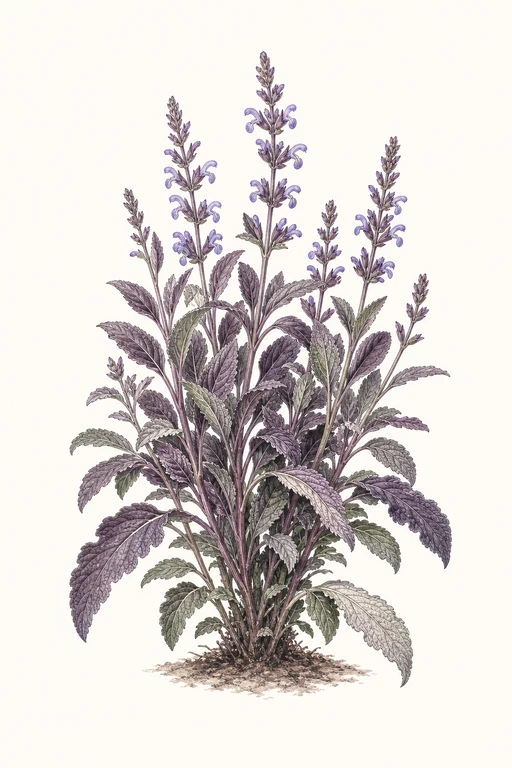
Velvety, deep purple foliage with a cool, aromatic lift—Purple Sage fills the garden with a distinctive, savory fragrance as the leaves mature to a richly toned, slightly silvery sheen.
The leaves are tender yet substantial, with a softly fuzzy texture that holds its character through drying and infuses with steady, herbaceous intensity. Grow Purple Sage for fragrant fresh sprigs and for crafting signature herb blends, where its bold purple color and classic sage character shine in dried sachets and flavorful seasonings.
Light: Full SunMaturity: 70 DaysHabit: Upright
Crop Dates : 13b
| Milestone | Date |
|---|---|
| Start Indoors | — |
| Climate | Frost-Free Climate |
| Transplant / Sow Outdoors | Oct 1st |
| Harvest Begins | Dec 10th |
| Harvest Ends | Feb 28th |
Crop Details
| Trait | Value |
|---|---|
| Days to Maturity | 70 |
| Sun Requirements | Full Sun |
| Growth Habit | Upright |
| Support Needed | None |
| Planting Depth | Normal |
| Germination Temp (°F) | 70 |
| Min Soil Temp (°F) | 60 |
| Min Night Temp (°F) | 50 |
| Harden Off (days) | 7 |
Culinary Notes

Chef's Note
Purple Sage gives you the recognizable sage backbone, but with a deeper, cooler aromatic lift that shows up in the butter as soon as you warm it—no hesitation, no timid flavor. Use it like a finishing herb in hot fat (or bruise and toss into braising liquid) so its perfume rides the sauce instead of turning dusty.

Best Uses
- finishing rubs and sauces for roast meats—bruise leaves to bloom the oils
- drying for winter cooking; holds aroma in bundles and sachets
- herb butter and compound oils (stays fragrant even after chilling)
- braises where you want sage to perfume the liquid, not just sit on top

Flavor Profile

Kitchen Pairings
Frequently Asked Questions
What pest or disease is most likely on Salvia officinalis (purple sage), and how should I treat it?
How often should I water Salvia officinalis during the main growing phase?
How can I tell when purple sage (Salvia officinalis) is ready to harvest?
Sowing Tips

Transplant Conditions
Wait until soil reaches 60°F and nights stay above 50°F before moving outdoors. Harden off for 7 days first.
Expert Note

Start indoors early, then harden off fully so the young plants go into warm, well-drained soil to avoid winter dieback.