
Purple Sprouting
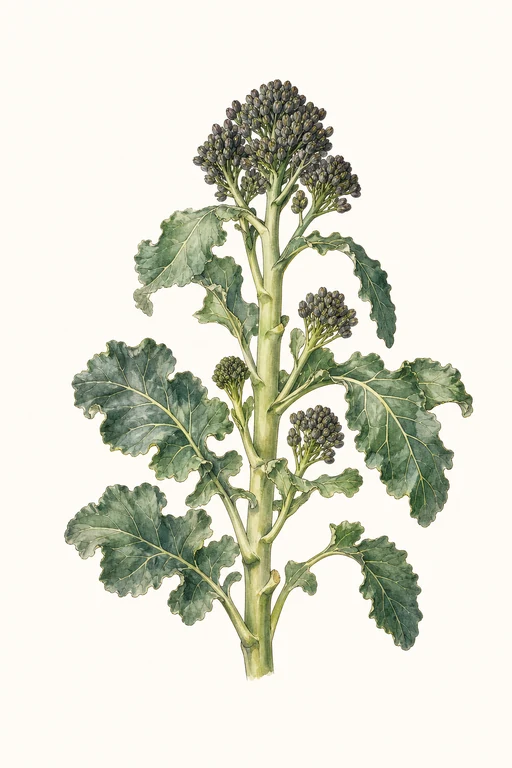
Tender, jewel-toned sprigs emerge in a cool-season hush—deep purple heads that fade to vivid green as they unfurl.
Purple Sprouting forms a sturdy, branching crown with crisp, finely textured florets and sweet, mild flavor that shines in quick roasts, steaming, and hearty winter sautés, as well as fresh-tossed sprout salads. Grow it for a long harvest window: cut the spears and watch fresh side shoots rise again and again through the season.
Light: Full SunMaturity: 50 DaysHabit: Upright
Location not set yet
Location not set yet
Enter your ZIP for local crop dates
Purple Sprouting Planting Dates by USDA Zone
Estimated US hardiness-zone windows for sow, transplant, and harvest. Enter a US ZIP above for exact local dates, or open a zone below.
| Zone | Start Indoors | Sow / Transplant | Harvest |
|---|---|---|---|
| Zone 1a | Protected Environment Only | ||
| Zone 1b | May 4th | May 25th | Jul 14th – Aug 1st |
| Zone 2a | Apr 27th | May 18th | Jul 7th – Aug 29th |
| Zone 2b | Apr 17th | May 8th | Jun 27th – Aug 25th |
| Zone 3a | Apr 17th | May 8th | Jun 27th – Sep 1st |
| Zone 3b | Apr 21st | May 12th | Jul 1st – Sep 21st |
| Zone 4a | Apr 17th | May 8th | Jun 27th – Sep 24th |
| Zone 4b | Apr 15th | May 6th | Jun 25th – Sep 27th |
| Zone 5a | Apr 10th | May 1st | Jun 20th – Sep 30th |
| Zone 5b | Apr 6th | Apr 27th | Jun 16th – Oct 5th |
| Zone 6a | Apr 3rd | Apr 24th | Jun 13th – Oct 10th |
| Zone 6b | Mar 28th | Apr 18th | Jun 7th – Oct 16th |
| Zone 7a | Mar 23rd | Apr 13th | Jun 2nd – Oct 20th |
| Zone 7b | Mar 13th | Apr 3rd | May 23rd – Oct 28th |
| Zone 8a | Mar 4th | Mar 25th | May 14th – Nov 5th |
| Zone 8b | Feb 23rd | Mar 16th | May 5th – Nov 12th |
| Zone 9a | Feb 6th | Feb 27th | Apr 18th – Nov 26th |
| Zone 9b | Jan 12th | Feb 2nd | Mar 24th – Dec 9th |
| Zone 10a | — | Oct 1st | Nov 20th – Feb 28th |
| Zone 10b | — | Oct 1st | Nov 20th – Feb 28th |
| Zone 11a | — | Oct 1st | Nov 20th – Feb 28th |
| Zone 11b | — | Oct 1st | Nov 20th – Feb 28th |
| Zone 12a | — | Oct 1st | Nov 20th – Feb 28th |
| Zone 12b | — | Oct 1st | Nov 20th – Feb 28th |
| Zone 13a | — | Oct 1st | Nov 20th – Feb 28th |
| Zone 13b | — | Oct 1st | Nov 20th – Feb 28th |
Crop Details
| Trait | Value |
|---|---|
| Days to Maturity | 50 |
| Sun Requirements | Full Sun |
| Growth Habit | Upright |
| Support Needed | None |
| Planting Depth | Normal |
| Germination Temp (°F) | 45 |
| Min Soil Temp (°F) | 40 |
| Min Night Temp (°F) | 30 |
| Harden Off (days) | 6 |
Culinary Notes

Chef's Note
Purple Sprouting is for the long game: those branching crowns stay sweet and crisp, so you want methods that heat fast and stop—steam, roast hot, or blanch for salad. It turns from jewel-purple to vivid green on cooking, and because it’s mild, it takes rich fats and salty accents (buttery, cheesy, or umami-heavy) without getting harsh.

Best Uses
- steaming or quick-simmering for snappy florets under a squeeze of lemon
- sheet-pan roasting until edges turn dark-golden while centers stay tender
- tossed sprout-salad stage: raw/very lightly blanched with a slick dressing so they stay crisp

Flavor Profile

Kitchen Pairings
Frequently Asked Questions
What pests commonly attack purple sprouting broccoli (Brassica oleracea var. italica), and how do I control them?
How often should I water purple sprouting broccoli during its main growing phase?
How can I tell when purple sprouting broccoli is ready to harvest?
Sowing Tips

Transplant Conditions
Wait until soil reaches 40°F and nights stay above 30°F before moving outdoors. Harden off for 6 days first.
Expert Note

For the earliest spears, aim to transplant so plants are established before the coldest part of winter; keep them well-fed and lightly mulched through overwintering.