
Rainbow Swiss Chard
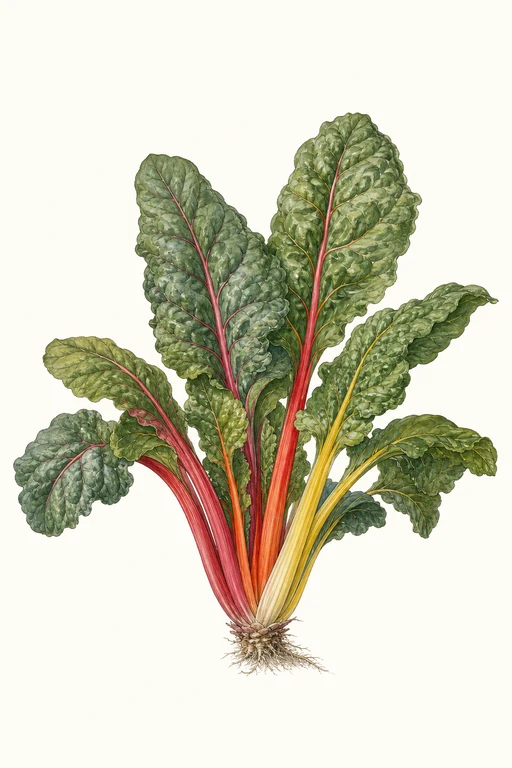
Tender, jewel-toned Rainbow Swiss Chard arrives with a vivid sweep of stems—crimson, golden, and emerald—rising to cradle deeply quilted leaves that feel crisp and satiny at once.
The flavor is sweetly earthy and pleasantly mild, with a clean, fresh bite that makes it a standout for bold color in the garden and on the plate. Grow it for abundant harvests over a long season, perfect for sautéing, steaming, and silky sauces, or for quick pickling when you want its hues to stay bright.
Light: Full SunMaturity: 55 DaysHabit: Rosette
Planting schedules and alerts are optimized for Columbus (Zone 6b).
Crop Dates
| Milestone | Date |
|---|---|
| Start Indoors | Direct Sow |
| Last Frost | Apr 25th |
| Transplant / Sow Outdoors | Apr 25th |
| Harvest Begins | Jun 19th |
| Harvest Ends | Oct 16th |
Crop Details
| Trait | Value |
|---|---|
| Days to Maturity | 55 |
| Sun Requirements | Full Sun |
| Growth Habit | Rosette |
| Support Needed | None |
| Planting Depth | Normal |
| Germination Temp (°F) | 70 |
| Min Soil Temp (°F) | 40 |
| Min Night Temp (°F) | 30 |
| Harden Off (days) | 6 |
Culinary Notes

Chef's Note
Rainbow chard earns its keep with stems that cook at a steady pace and leaves that turn silky without getting hollow, so you get color and texture in the same bite. Sweetly earthy and mild enough for lemon, cheese, and stock, it also holds up well when you wilt it hard and puree for a spoonable sauce.

Best Uses
- quick sautéed ribbons in olive oil with salt until edges go silky
- steamed chard with a lemony finish—stems stay pleasantly firm
- blended into a silky sauce for pasta or beans (wilt then puree)
- quick pickling of stems for bright, snappy, jewel-toned crunch

Flavor Profile

Kitchen Pairings
Frequently Asked Questions
What pest or disease most commonly affects Beta vulgaris var. cicla (Rainbow Swiss chard), and how do I control it?
How often should I water Rainbow Swiss chard during the main growing phase to keep it tender?
How can I tell when Rainbow Swiss chard is ready to harvest?
Sowing Tips

Transplant Conditions
Wait until soil reaches 40°F and nights stay above 30°F before moving outdoors. Harden off for 6 days first.
Expert Note

For sweetest flavor, keep soil evenly moist and harvest outer leaves often to encourage new growth.