
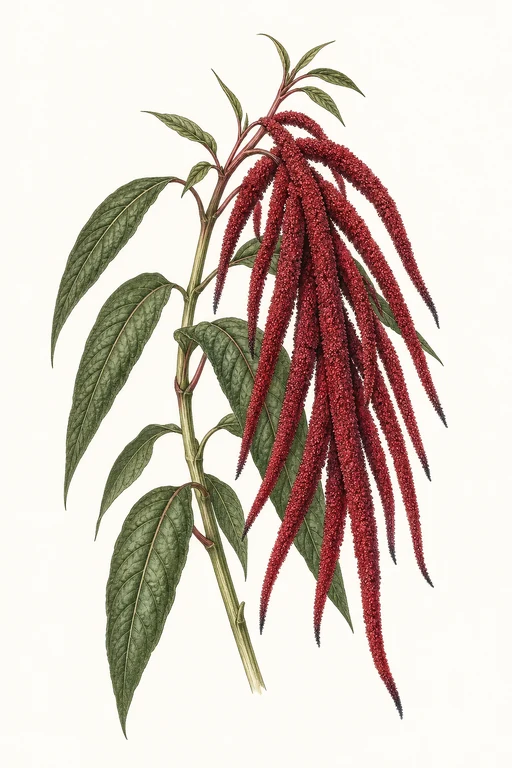
Red Cat's Tail
Velvet-red plumes cascade like a torchlight fountain, each seed head swelling with a deep, wine-bright glow that holds its color through the season.
Red Cat's Tail grain amaranth forms a sturdy, upright-to-climbing habit that yields abundant, tiny seeds with a pleasantly nutty, earthy flavor and a satisfying, hearty texture. Grow it for striking ornamental impact and for grain harvest—ideal for flavorful amaranth blends, warm porridges, and robust, seed-forward dishes that celebrate its bold character.
Light: Full SunMaturity: 90 DaysHabit: Upright
Planting schedules and alerts are optimized for Columbus (Zone 6b).
Crop Dates
| Milestone | Date |
|---|---|
| Start Indoors | Direct Sow |
| Last Frost | Apr 25th |
| Transplant / Sow Outdoors | Apr 25th |
| Harvest Begins | Jul 24th |
| Harvest Ends | Oct 16th |
Crop Details
| Trait | Value |
|---|---|
| Days to Maturity | 90 |
| Sun Requirements | Full Sun |
| Growth Habit | Upright |
| Support Needed | None |
| Planting Depth | Normal |
| Germination Temp (°F) | 70 |
| Min Soil Temp (°F) | 60 |
| Min Night Temp (°F) | 50 |
| Harden Off (days) | Not Required |
Culinary Notes

Chef's Note
This grain amaranth earns its keep with tiny seeds that stay chewy and nutty, giving you that satisfying bite in porridge and pilaf. Toasting deepens the earthy notes and keeps it from tasting flat next to bold spices like cumin and smoked paprika.

Best Uses
- warm porridges cooked low and slow until the grains soften but stay intact
- seed-forward pilafs where it stays toothy instead of turning mushy
- toasted amaranth used like a crunchy topping for salads and yogurt bowls
- thickening base for robust stews and bean soups

Flavor Profile

Kitchen Pairings
Frequently Asked Questions
What pest or disease commonly affects Amaranthus caudatus (red cat’s tail), and how do I prevent it?
How often should I water Amaranthus caudatus during the main growing phase?
How can I tell when red cat’s tail (Amaranthus caudatus) is ready to harvest?
Sowing Tips

Transplant Conditions
Wait until soil reaches 60°F and nights stay above 50°F before moving outdoors.
Expert Note

For grain and best plume color, sow in full sun after frost when soil warms, then keep evenly moist until established to prevent weak, sprawling plants.