
Red Chard
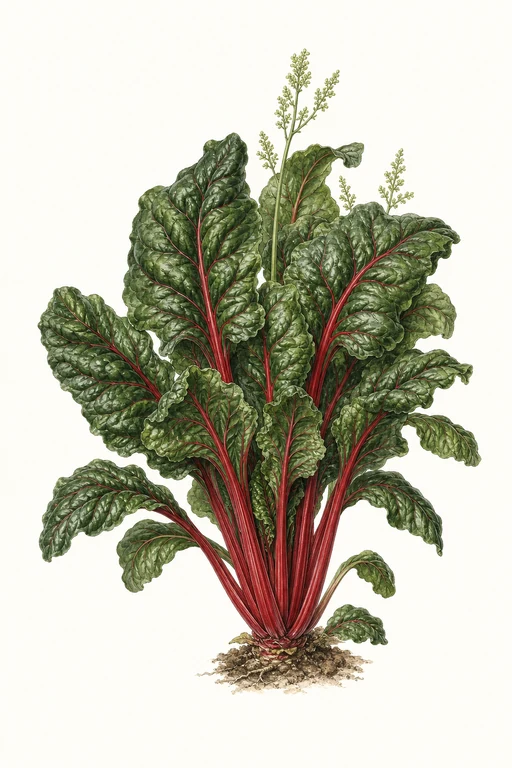
Silk-warm crimson ribs rise from a velvet-green canopy, promising tender leaves with a crisp, juicy bite and a pleasantly earthy sweetness.
Red Chard forms an upright, well-filled clump in about 50 days, with glossy foliage that stays attractive and harvest-ready as the color deepens. Grow it for fresh salads and quick sautés, or for vibrant braises and hearty soups where its ruby stems lend both color and character.
Light: Full SunMaturity: 50 DaysHabit: Rosette
Planting schedules and alerts are optimized for Columbus (Zone 6b).
Crop Dates
| Milestone | Date |
|---|---|
| Start Indoors | Direct Sow |
| Last Frost | Apr 25th |
| Transplant / Sow Outdoors | Apr 25th |
| Harvest Begins | Jun 14th |
| Harvest Ends | Oct 16th |
Crop Details
| Trait | Value |
|---|---|
| Days to Maturity | 50 |
| Sun Requirements | Full Sun |
| Growth Habit | Rosette |
| Support Needed | None |
| Planting Depth | Normal |
| Germination Temp (°F) | 70 |
| Min Soil Temp (°F) | 40 |
| Min Night Temp (°F) | 32 |
| Harden Off (days) | 7 |
Culinary Notes

Chef's Note
Red chard’s ruby ribs bring a clean, faintly tart edge that stands up to fast heat and holds shape when wilted—no collapse into swampy greens. Treat it like a hybrid of spinach and a crisp herb: quick sauté or short braise, then brighten hard with acid and finish creamy or salty.

Best Uses
- quick sauté with a hot splash of fat and minimal steam so the leaves stay bright
- braise or steam then finish with lemon to sharpen the stem’s tang
- fold into thick soups and stews where the stems keep structure
- raw or lightly dressed: thin-strip leaves and ribs for a crunchy salad

Flavor Profile

Kitchen Pairings
Frequently Asked Questions
What’s the most common pest or disease issue on Swiss chard (Beta vulgaris var. cicla) and how do I fix it?
How often should I water red chard during its main growing phase?
How can I tell when red chard is ready to harvest?
Sowing Tips

Transplant Conditions
Wait until soil reaches 40°F and nights stay above 32°F before moving outdoors. Harden off for 7 days first.
Expert Note

For best flavor and tender leaves, keep soil evenly moist and harvest outer leaves regularly once plants are 6–8 inches tall.