
Red La Soda
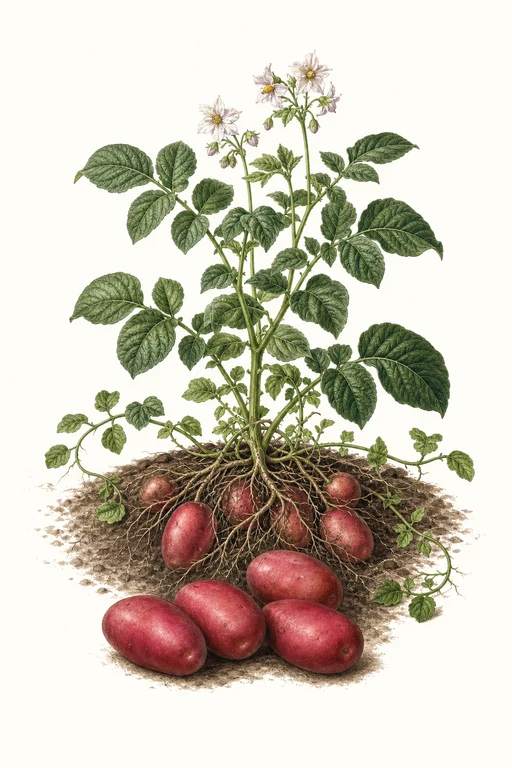
Velvety-smooth skins in rich, wine-red tones cradle a golden, creamy interior that feels luxuriously dense—an inviting bite with a fine, even texture.
Red La Soda’s flavor is pleasantly earthy and balanced, making it a standout for roasting to a caramelized edge, for pan-ready browning, and for silky mash with a naturally rosy depth. Grow it for a reliable 90-day harvest that delivers market-class red potatoes with a polished, uniform look from row to table.
Light: Full SunMaturity: 90 DaysHabit: Clumping
Crop Dates : 13b
| Milestone | Date |
|---|---|
| Climate | Frost-Free Climate |
| Growing Approach | Continuous Production |
Crop Details
| Trait | Value |
|---|---|
| Days to Maturity | 90 |
| Sun Requirements | Full Sun |
| Growth Habit | Clumping |
| Support Needed | None |
| Planting Depth | Normal |
| Germination Temp (°F) | 60 |
| Min Soil Temp (°F) | 45 |
| Min Night Temp (°F) | 28 |
| Harden Off (days) | Not Required |
Culinary Notes

Chef's Note
Red La Soda’s dense, evenly textured interior makes it a reliable choice for mash that comes out creamy rather than starchy-gritty. Roast or pan-brown it until the edges caramelize, and the mild rosy earthiness will play beautifully with dairy fats and bright lemon.

Best Uses
- roasting for a caramelized edge (high surface crunch without dryness)
- pan-browning or skillet “cutlets” for even crust and creamy centers
- silky mash that stays smooth and doesn’t get gluey
- roasted wedges where the flesh holds a rich, uniform bite

Flavor Profile

Kitchen Pairings
Frequently Asked Questions
What pest or disease commonly affects Solanum tuberosum (potatoes) and how can I control it in a home garden?
How often should I water potatoes during the main growing phase?
How do I tell when my potatoes are ready to harvest?
Sowing Tips

Transplant Conditions
Wait until soil reaches 45°F and nights stay above 28°F before moving outdoors.
Expert Note

Plant certified seed potatoes after soil warms and they’re chitted, then hill as plants grow to protect developing tubers from greening.