
Red Russian Kale
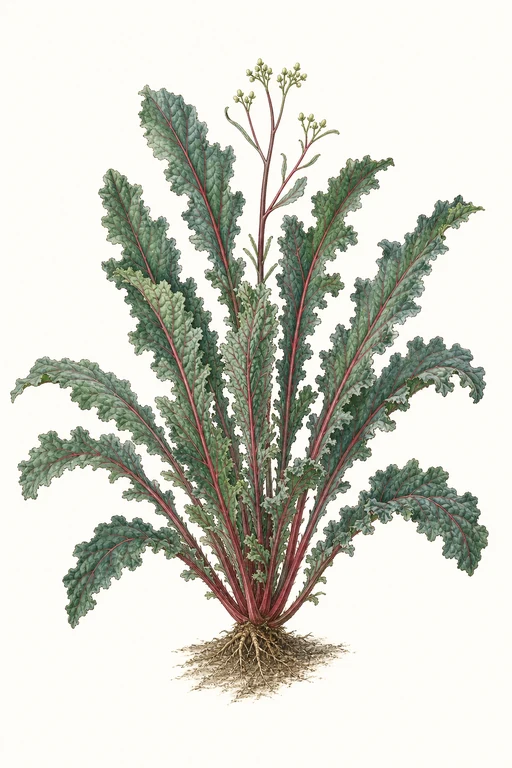
Velvety, blue-green leaves are crowned with a rosy-red blush that deepens as the weather cools—tender enough for fresh salads yet hearty with a satisfying chew.
Red Russian Kale forms an airy, upright rosette of narrow, ruffled blades that hold their color beautifully through the season. Grow it for bold, leafy greens—ideal for sautéing, steaming, and stirring into robust soups, or for quick pickling to capture its peppery bite.
Light: Full SunMaturity: 55 DaysHabit: Rosette
Planting schedules and alerts are optimized for Columbus (Zone 6b).
Crop Dates
| Milestone | Date |
|---|---|
| Start Indoors | Mar 28th |
| Last Frost | Apr 25th |
| Transplant / Sow Outdoors | Apr 18th |
| Harvest Begins | Jun 12th |
| Harvest Ends | Oct 16th |
Crop Details
| Trait | Value |
|---|---|
| Days to Maturity | 55 |
| Sun Requirements | Full Sun |
| Growth Habit | Rosette |
| Support Needed | None |
| Planting Depth | Normal |
| Germination Temp (°F) | 70 |
| Min Soil Temp (°F) | 45 |
| Min Night Temp (°F) | 32 |
| Harden Off (days) | 6 |
Culinary Notes

Chef's Note
Red Russian Kale is built for heat that’s fast—its narrow, ruffled leaves stay springy instead of collapsing, and the peppery edge turns mellow while the rosy tint holds. Give it a hot pan or a vinegar hit, and it rewards you with a chewy, deeply green mouthfeel that white beans and salty fat love.

Best Uses
- stir-in soups and stews at the end for a springy chew
- fast sauté with a glossy finish (no long, soggy braise)
- steam and dress with vinegar-based slaws for a sharp, crisp salad effect
- quick pickling to capture its peppery snap

Flavor Profile

Kitchen Pairings
Frequently Asked Questions
What pest or disease commonly affects Red Russian kale (Brassica sp.) and how do I control it at home?
How often should I water Red Russian kale during the main growing phase?
How do I tell when Red Russian kale is ready to harvest?
Sowing Tips

Transplant Conditions
Wait until soil reaches 45°F and nights stay above 32°F before moving outdoors. Harden off for 6 days first.
Expert Note

For the sweetest flavor, aim for cool temperatures and give plants a little extra time to establish before your weather warms up.