
Red Thai
Aromatic as a warm breeze—Red Thai holy basil releases a vivid, peppery-sweet fragrance with a distinctly spicy edge as soon as the leaves are bruised.
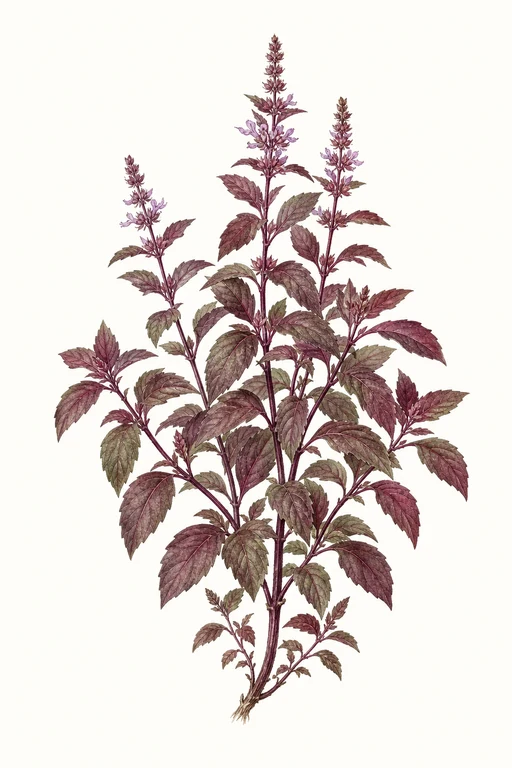
Tender, deep burgundy stems and leaves carry a lush, velvety texture and a bright, herbal bite that shines in fresh sprigs, quick infusions, and bold sauces; its heat is lively rather than harsh, making it a favorite for gardeners who love to grow flavor-forward greens. Ready in about 30 days, Red Thai brings fast, tropical vigor to beds and containers, rewarding you with a steady harvest of fragrant foliage.
Light: Full SunMaturity: 30 DaysHabit: Upright
Planting schedules and alerts are optimized for Columbus (Zone 6b).
Crop Dates
| Milestone | Date |
|---|---|
| Start Indoors | Mar 28th |
| Last Frost | Apr 25th |
| Transplant / Sow Outdoors | Jun 6th |
| Harvest Begins | Jul 6th |
| Harvest Ends | Oct 16th |
Crop Details
| Trait | Value |
|---|---|
| Days to Maturity | 30 |
| Sun Requirements | Full Sun |
| Growth Habit | Upright |
| Support Needed | None |
| Planting Depth | Normal |
| Germination Temp (°F) | 70 |
| Min Soil Temp (°F) | 60 |
| Min Night Temp (°F) | 50 |
| Harden Off (days) | 10 |
Culinary Notes

Chef's Note
Red Thai holy basil has that holy-basil thing—peppery-sweet perfume that blooms fast when bruised, then lands as warm, clean heat. Use it late and aggressively (torn, not chopped) so the velvety leaves stay aromatic and don’t go dull in the pan.

Best Uses
- torn-leaf stir-fries for a last-second fragrant punch
- Thai-style basil chicken or pork where the heat hugs the sauce
- hot quick infusions (tea/syrup) for a spicy-floral lift
- bruise-and-splash finishing herb for noodles and broths

Flavor Profile

Frequently Asked Questions
What’s the most common pest problem for Ocimum tenuiflorum (Holy Red, Red Thai), and how do I control it?
How often should I water Ocimum tenuiflorum during the main growing phase?
How can I tell when Red Thai (Ocimum tenuiflorum) is ready to harvest?
Sowing Tips

Transplant Conditions
Wait until soil reaches 60°F and nights stay above 50°F before moving outdoors. Harden off for 10 days first.
Expert Note

Warm soil and steady moisture are key—basil will sulk in cool nights, so transplant after nights stay consistently warm and pinch tips early for bushiness.