
Rex
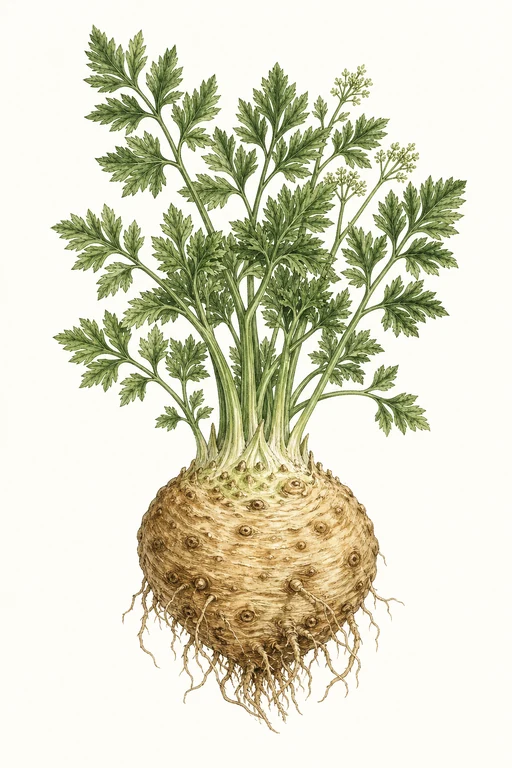
Rex celeriac brings a wonderfully nutty, celery-bright flavor with a creamy, fine-grained bite when roasted or simmered.
Its knobby, turnip-like crown develops into a substantial, smooth-skinned bulb with pale interior flesh that stays tender rather than woody, making it a standout for velvety purées and hearty gratins. Grow Rex for a cool-season harvest that rewards patience—110 days from sowing to a richly flavored root you’ll reach for again and again.
Light: Full SunMaturity: 110 DaysHabit: Upright
Planting schedules and alerts are optimized for Columbus (Zone 6b).
Crop Dates
| Milestone | Date |
|---|---|
| Start Indoors | Feb 14th |
| Last Frost | Apr 25th |
| Transplant / Sow Outdoors | Apr 18th |
| Harvest Begins | Aug 6th |
| Harvest Ends | Oct 16th |
Crop Details
| Trait | Value |
|---|---|
| Days to Maturity | 110 |
| Sun Requirements | Full Sun |
| Growth Habit | Upright |
| Support Needed | None |
| Planting Depth | Normal |
| Germination Temp (°F) | 70 |
| Min Soil Temp (°F) | 45 |
| Min Night Temp (°F) | 28 |
| Harden Off (days) | 7 |
Culinary Notes

Chef's Note
Rex celeriac earns its keep when heat turns its raw celery snap into a nutty, creamy interior that doesn’t slip into toughness. Because it’s naturally aromatic and sweet, it plays beautifully with butter-fat and savory seasonings—just keep it away from the same allium lane you’d use with onions or leeks.

Best Uses
- velvety celeriac purée or mash (steam-cooked then whipped with fat)
- roasted wedges that brown at the edges without going woody
- thick gratins where it stays tender under a long bake
- slow-simmered soups for a spoon-coating body

Flavor Profile

Frequently Asked Questions
What pest or disease most often attacks celery root (Apium graveolens var. rapaceum), and how can I control it?
How often should I water celery root during the main growing phase, and what soil moisture should I aim for?
How do I tell when celery root is ready to harvest (Apium graveolens var. rapaceum)?
Sowing Tips

Transplant Conditions
Wait until soil reaches 45°F and nights stay above 28°F before moving outdoors. Harden off for 7 days first.
Expert Note

Start Rex celeriac indoors early for a long root-forming season, then transplant only when nights are reliably above freezing to avoid slow, misshapen roots.