
Rhubarb Chard
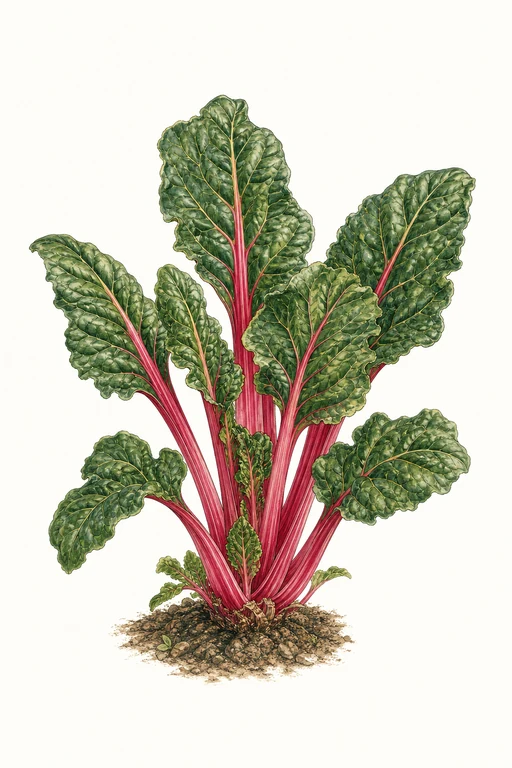
Silky, deeply ribbed leaves unfurl in a rich spectrum of color—crisp, tender greens with bright, jewel-toned stems that feel almost luminous in the garden.
Rhubarb Chard delivers a pleasantly sweet, mild flavor with a succulent bite, making it especially prized for bold sautés, vibrant braises, and silky purées, as well as quick pickling for tangy relish. Grow it for repeat harvests: cut the outer leaves and watch the plant keep producing with steady, garden-friendly vigor.
Light: Full SunMaturity: 50 DaysHabit: Rosette
Planting schedules and alerts are optimized for Columbus (Zone 6b).
Crop Dates
| Milestone | Date |
|---|---|
| Start Indoors | Direct Sow |
| Last Frost | Apr 25th |
| Transplant / Sow Outdoors | Apr 18th |
| Harvest Begins | Jun 7th |
| Harvest Ends | Oct 16th |
Crop Details
| Trait | Value |
|---|---|
| Days to Maturity | 50 |
| Sun Requirements | Full Sun |
| Growth Habit | Rosette |
| Support Needed | None |
| Planting Depth | Normal |
| Germination Temp (°F) | 70 |
| Min Soil Temp (°F) | 40 |
| Min Night Temp (°F) | 28 |
| Harden Off (days) | 6 |
Culinary Notes

Chef's Note
Rhubarb chard brings a two-texture eating experience: sweet, delicate leaf and a more assertive, jewel-bright stem that turns tender without collapsing. Cook it hard and quick for gloss, or reduce it down for a purée that clings—this is the green that makes a sauce feel luxuriously spoonable.

Best Uses
- hot, fast sauté in browned butter until ribs are tender and leaves stay glossy
- braise or steam with a splash of vinegar/lemon to keep the stems vivid
- smooth purée for swirled bases under fish or roast poultry
- quick pickling of stems for tangy crunch relish

Flavor Profile

Kitchen Pairings
Frequently Asked Questions
What disease or pest commonly affects Swiss chard (Beta vulgaris var. cicla), and what should I do if I see it?
How often should I water Swiss chard during its main growing phase?
How do I tell when Swiss chard is ready to harvest?
Sowing Tips

Transplant Conditions
Wait until soil reaches 40°F and nights stay above 28°F before moving outdoors. Harden off for 6 days first.
Expert Note

For best tender stems and flavor, keep soil evenly moist and harvest outer leaves/stems regularly rather than cutting everything at once.