
Roman Chamomile
Fragrant as a sun-warmed meadow, Roman Chamomile releases a sweet, apple-like perfume with a gentle, honeyed finish.
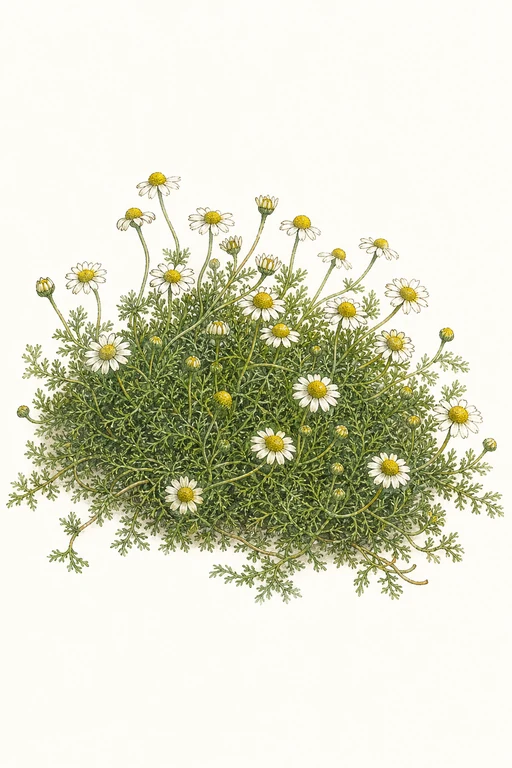
The foliage forms a low, velvety mat of finely divided leaves, and at maturity it bears daisy-like blooms with crisp, golden centers and white rays that feel delicate yet resilient. Ideal for soothing herbal infusions and aromatic sachets, this variety is a charming, low-growing favorite for edging and calm garden moments.
Light: Full SunMaturity: 70 DaysHabit: Perennial_Crown
Planting schedules and alerts are optimized for Columbus (Zone 6b).
Crop Dates
| Milestone | Date |
|---|---|
| Start Indoors | Mar 14th |
| Last Frost | Apr 25th |
| Transplant / Sow Outdoors | Apr 25th |
| Harvest Begins | Jul 4th |
| Harvest Ends | Oct 16th |
Crop Details
| Trait | Value |
|---|---|
| Days to Maturity | 70 |
| Sun Requirements | Full Sun |
| Growth Habit | Perennial_Crown |
| Support Needed | None |
| Planting Depth | Surface |
| Germination Temp (°F) | 65 |
| Min Soil Temp (°F) | 40 |
| Min Night Temp (°F) | 35 |
| Harden Off (days) | 7 |
Culinary Notes

Chef's Note
Roman chamomile reads more like a fragrant apple-honey than a sharp chamomile—delicate, but persistent. Use it in warm infusions or gently in syrups where its sweetness won’t get steamrolled, and it lands beautifully with lemony brightness and vanilla-leaning desserts.

Best Uses
- steeped herbal infusion for a light, soothing cup
- aromatic syrup or honeyed tea base for desserts
- tuck dried sprigs into sachets for subtle pantry/fragrance seasoning
- finishing drizzle in fruit salads or custards (light hand)

Flavor Profile

Kitchen Pairings
Frequently Asked Questions
What pest or disease most commonly affects Chamaemelum nobile (Roman chamomile), and how do I control it?
How often should I water Roman chamomile during its main growing phase, and what soil moisture level should I maintain?
How can I tell when Roman chamomile is ready to harvest?
Sowing Tips

Transplant Conditions
Wait until soil reaches 40°F and nights stay above 35°F before moving outdoors. Harden off for 7 days first.
Expert Note

For roman chamomile, start seeds shallow (surface sow) and keep them evenly moist; transplant after danger of frost once nights are consistently mild.