
Romanesco Italia
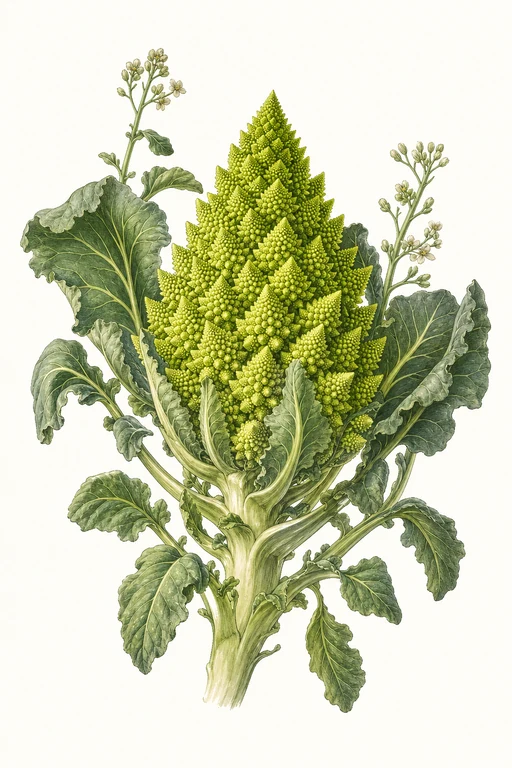
Fragrant and vividly alive on the stem, Romanesco Italia forms tight, chartreuse spirals that seem to glow from within—crisp, tender, and subtly nutty with a clean, sweet edge.
The florets hold their sculptural texture through roasting and are equally captivating fresh, lending a vivid centerpiece to salads, gratins, and creamy sauces. Grow Romanesco Italia for a show-stopping harvest at about 75 days, when each head’s geometric ridges are at their most refined.
Light: Full SunMaturity: 75 DaysHabit: Rosette
Planting schedules and alerts are optimized for Columbus (Zone 6b).
Crop Dates
| Milestone | Date |
|---|---|
| Start Indoors | Mar 28th |
| Last Frost | Apr 25th |
| Transplant / Sow Outdoors | Apr 18th |
| Harvest Begins | Jul 2nd |
| Harvest Ends | Oct 16th |
Crop Details
| Trait | Value |
|---|---|
| Days to Maturity | 75 |
| Sun Requirements | Full Sun |
| Growth Habit | Rosette |
| Support Needed | None |
| Planting Depth | Normal |
| Germination Temp (°F) | 40 |
| Min Soil Temp (°F) | 45 |
| Min Night Temp (°F) | 32 |
| Harden Off (days) | 6 |
Culinary Notes

Chef's Note
Romanesco Italia tastes like cauliflower with extra aromatic lift—the ridged spirals stay crisp-tender instead of turning mushy, especially when you roast hot and fast. It’s at its best with lemony brightness and dairy richness, where the nutty, sweet edge gets all the spotlight.

Best Uses
- roasting until the ridges bronze—keeps the spiral texture from collapsing
- steaming then tossing into a warm lemon-butter dressing for a bright, crisp bite
- gratin—using cream to mellow the nutty flavor without flattening the geometry
- quick-pickling or raw slicing into vivid salads so it stays crunchy

Flavor Profile

Kitchen Pairings
Frequently Asked Questions
What pests or diseases commonly affect Brassica oleracea var. botrytis (Romanesco) and how can I manage them?
How often should I water Romanesco during head development to keep it from splitting or staying button-sized?
How do I know when Romanesco is ready to harvest?
Sowing Tips

Transplant Conditions
Wait until soil reaches 45°F and nights stay above 32°F before moving outdoors. Harden off for 6 days first.
Expert Note

For the best Romanesco texture and flavor, keep soil moisture consistent and avoid heat stress—uniform cool temperatures help prevent loose heads.