
Rosa Bianca
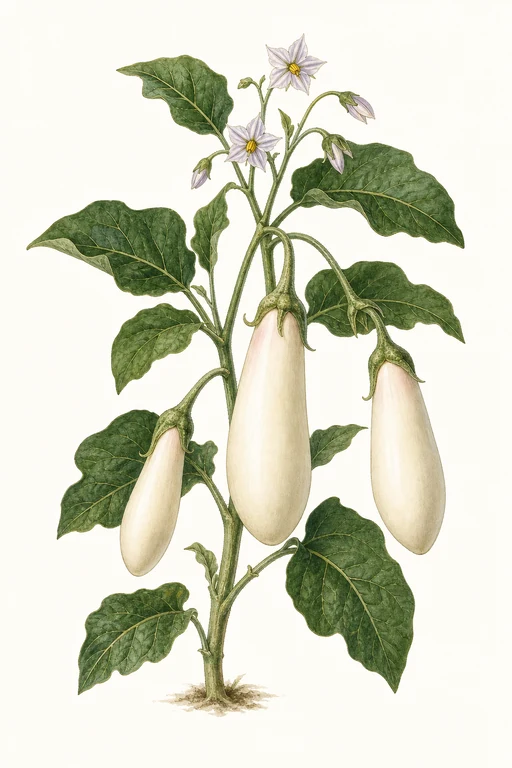
Velvety skin with a luminous blush—Rosa Bianca eggplant ripens to a pale, creamy-white that glows against deep green foliage, with a subtly sweet, delicate flavor and a tender, fine-grained bite.
The fruit is elegantly elongated and pleasantly firm, ideal for showcasing its mild character in Italian-style preparations where it shines roasted or grilled, and it also lends itself beautifully to hearty sauces and pickling for a bright, fragrant accent. Grow Rosa Bianca for a season-long harvest that feels as refined as it looks—an heirloom mood in a modern garden.
Light: Full SunMaturity: 75 DaysHabit: Indeterminate
Planting schedules and alerts are optimized for Columbus (Zone 6b).
Crop Dates
| Milestone | Date |
|---|---|
| Start Indoors | Mar 7th |
| Last Frost | Apr 25th |
| Transplant / Sow Outdoors | Jun 13th |
| Harvest Begins | Aug 27th |
| Harvest Ends | Oct 16th |
Crop Details
| Trait | Value |
|---|---|
| Days to Maturity | 75 |
| Sun Requirements | Full Sun |
| Growth Habit | Indeterminate |
| Support Needed | Stake |
| Planting Depth | Normal |
| Germination Temp (°F) | 80 |
| Min Soil Temp (°F) | 60 |
| Min Night Temp (°F) | 50 |
| Harden Off (days) | 10 |
Culinary Notes

Chef's Note
Rosa Bianca’s mild sweetness and fine-grained flesh make it a standout when you want eggplant to taste like itself—grilled, roasted, or pickled without going bitter or hollow. It’s built for Italian-style handling where the skin goes plush and the interior stays tender rather than turning watery.

Best Uses
- grilled or blistered eggplant slices that stay firm instead of collapsing
- roasted wedges tossed with olive oil, salt, and lemon to highlight its subtle sweetness
- caponata-style chunky sauce where it melts but still holds shape
- quick pickling to capture a bright, fragrant tang against its gentle flavor

Flavor Profile

Kitchen Pairings
Frequently Asked Questions
What pest or disease is most likely on Solanum melongena (eggplant) and how can I manage it at home?
How often should I water Solanum melongena during the main growing phase?
How do I tell when Solanum melongena (eggplant) is ready to harvest?
Sowing Tips

Transplant Conditions
Wait until soil reaches 60°F and nights stay above 50°F before moving outdoors. Harden off for 10 days first.
Expert Note

Use soil-warming (black plastic or low tunnels) before transplanting to prevent cold-stunt and keep fruits forming steadily.