
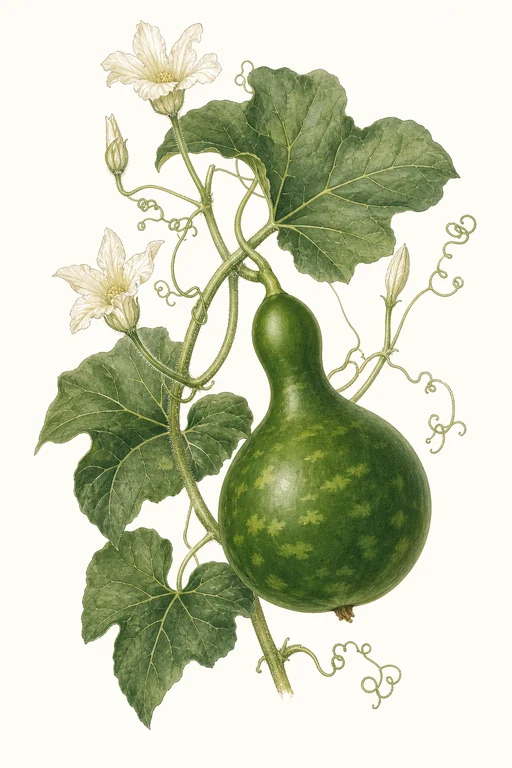
Round Gourd
Fragrant in the garden and striking on the vine, Round Gourd forms a smooth, rounded bottle shape that ripens to a rich, burnished green—sometimes with a faint mottling that catches the light.
The tender young fruit offers a mild, clean flavor and a pleasantly crisp, juicy texture, ideal for quick skillet-style roasting, fresh slices, and vibrant sauces. Grow it for its dependable 70-day rhythm and its showy, long-lasting presence in the harvest basket as the fruit matures.
Light: Full SunMaturity: 70 DaysHabit: Vine
Planting schedules and alerts are optimized for Columbus (Zone 6b).
Crop Dates
| Milestone | Date |
|---|---|
| Start Indoors | May 9th |
| Last Frost | Apr 25th |
| Transplant / Sow Outdoors | May 23rd |
| Harvest Begins | Aug 1st |
| Harvest Ends | Oct 16th |
Crop Details
| Trait | Value |
|---|---|
| Days to Maturity | 70 |
| Sun Requirements | Full Sun |
| Growth Habit | Vine |
| Support Needed | Trellis |
| Planting Depth | Normal |
| Germination Temp (°F) | 75 |
| Min Soil Temp (°F) | 65 |
| Min Night Temp (°F) | 55 |
| Harden Off (days) | 12 |
Culinary Notes

Chef's Note
This tender bottle gourd is all about restraint: a clean, juicy crunch that turns silky fast, so it likes heat that’s quick and decisive. Use it with aromatics and bright acids—otherwise the flavor can read a little neutral next to louder ingredients.

Best Uses
- quick skillet sauté to keep the rounds crisp-tender
- tender rounds in stir-fries where they stay juicy
- roast until edges bronze and the center turns silkier
- fresh slices in salted, lemony salads for snap and moisture
- light coconut- or yogurt-based sauces that coat without overwhelming

Flavor Profile

Frequently Asked Questions
What pest or disease commonly affects Lagenaria siceraria (round gourds), and how can I control it at home?
How often should I water Lagenaria siceraria during the main growing phase?
How do I tell when a round gourd (Lagenaria siceraria) is ready to harvest?
Sowing Tips

Transplant Conditions
Wait until soil reaches 65°F and nights stay above 55°F before moving outdoors. Harden off for 12 days first.

Direct Sow Preferred
Sensitive roots — does not transplant well. If starting indoors, use biodegradable pots and disturb roots as little as possible when moving outdoors.
Expert Note

Use warm soil and minimal root disturbance—start/plant when nights are reliably warm to avoid slow, stunted vines.