
Rowena
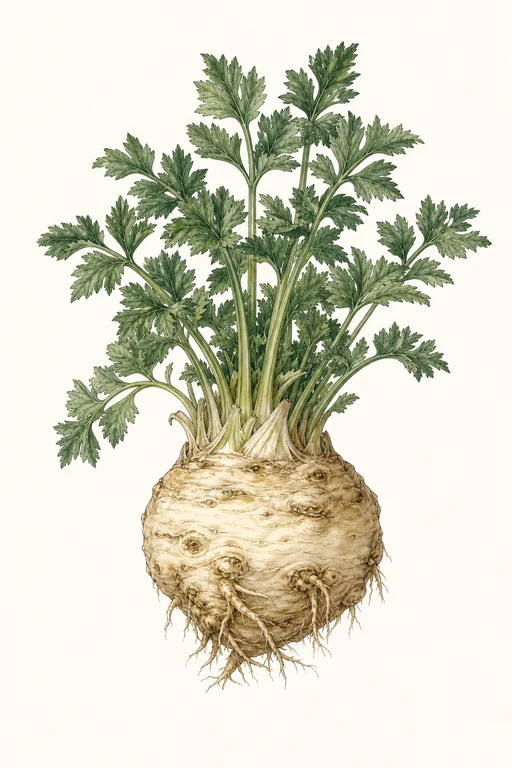
Aromatic and deeply satisfying, Rowena celeriac forms a handsome, knobby crown with a creamy, ivory interior and a crisp, fine-grained bite.
Its flavor is bold yet refined—celery-bright with a gentle sweetness that lingers pleasantly, making it a standout for roasting until tender, pureeing into velvety sides, or simmering into rich soups and veloutés. Grow Rowena for a dependable 90-day harvest and a root that stores beautifully, bringing garden-fresh character to every cool-season table.
Light: Part SunMaturity: 90 DaysHabit: Upright
Planting schedules and alerts are optimized for Columbus (Zone 6b).
Crop Dates
| Milestone | Date |
|---|---|
| Start Indoors | Feb 14th |
| Last Frost | Apr 25th |
| Transplant / Sow Outdoors | Apr 18th |
| Harvest Begins | Jul 17th |
| Harvest Ends | Oct 16th |
Crop Details
| Trait | Value |
|---|---|
| Days to Maturity | 90 |
| Sun Requirements | Part Sun |
| Growth Habit | Upright |
| Support Needed | None |
| Planting Depth | Normal |
| Germination Temp (°F) | 70 |
| Min Soil Temp (°F) | 40 |
| Min Night Temp (°F) | 28 |
| Harden Off (days) | 6 |
Culinary Notes

Chef's Note
Rowena celeriac hits with a celery-spark and a lightly sweet core, plus that fine-grained crisp-tender texture that stays graceful under heat. Roast or purée it and it becomes luxuriously smooth—just finish with lemon and pepper so the aroma stays lively, not dull.

Best Uses
- roast into caramel edges, then mash or shave into warm salads
- purée into a silky velouté—stir in butter/cream off-heat for body
- simmer into hearty soups where it thickens without turning starchy
- cut into thin batons and toss with vinaigrette for a crisp-cool contrast

Flavor Profile

Frequently Asked Questions
What pest or disease commonly affects celery root (Apium graveolens var. rapaceum), and how can I stop it?
How often should I water celery root during the main growing phase to grow a good bulb?
How do I tell when celery root is ready to harvest (Apium graveolens var. rapaceum)?
Sowing Tips

Transplant Conditions
Wait until soil reaches 40°F and nights stay above 28°F before moving outdoors. Harden off for 6 days first.
Expert Note

Start celeriac indoors early for a strong crown, and transplant as soon as conditions are cool (it’s cold-tolerant and resistant to bolting if a chill hits after planting).