
Safari Red
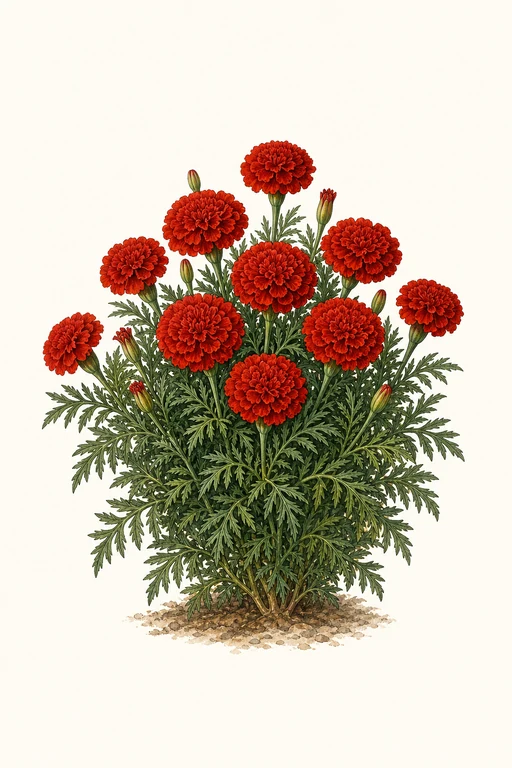
Warm, velvety blooms lead the way—Safari Red carries rich, ember-red petals with a softly ruffled edge that seems to glow against deep green foliage.
The flower heads are compact and full, forming tidy mounds that stay showy from early summer through the first cool days. Ideal for brightening beds, borders, and containers, Safari Red also makes a dependable companion presence in the garden, bringing color and lively texture wherever you plant it.
Light: Full SunMaturity: 60 DaysHabit: Clumping
Planting schedules and alerts are optimized for Columbus (Zone 6b).
Crop Dates
| Milestone | Date |
|---|---|
| Start Indoors | Mar 28th |
| Last Frost | Apr 25th |
| Transplant / Sow Outdoors | Apr 25th |
| Harvest Begins | Jun 24th |
| Harvest Ends | Oct 16th |
Crop Details
| Trait | Value |
|---|---|
| Days to Maturity | 60 |
| Sun Requirements | Full Sun |
| Growth Habit | Clumping |
| Support Needed | None |
| Planting Depth | Normal |
| Germination Temp (°F) | 70 |
| Min Soil Temp (°F) | 50 |
| Min Night Temp (°F) | 45 |
| Harden Off (days) | 7 |
Culinary Notes

Chef's Note
Even though it’s French marigold, Safari Red’s petals are meant for the plate—use sparingly because the peppery bite and slight bitterness show up fast. These velvety, ruffled blooms are best treated like a micro-garnish: short infusions, cold finishes, and quick hits of citrusy heat.

Best Uses
- toss 2–3 petals into a fresh salad for a snap of spicy brightness
- steep petals briefly in hot liquid for a faintly floral, peppery tint
- use as a garnish to color and lightly season chilled drinks or yogurt sauces

Flavor Profile

Kitchen Pairings
Frequently Asked Questions
What pest or disease is most common on Tagetes patula (marigold) and how do I control it?
How often should I water Tagetes patula during the main growing phase?
How can I tell when Tagetes patula (Safari Red) is ready to harvest?
Sowing Tips

Transplant Conditions
Wait until soil reaches 50°F and nights stay above 45°F before moving outdoors. Harden off for 7 days first.
Expert Note

For best flowering, keep plants in full sun and avoid over-fertilizing with nitrogen—moderate feeding plus deadheading will prolong blooms.