
Salmon Baby
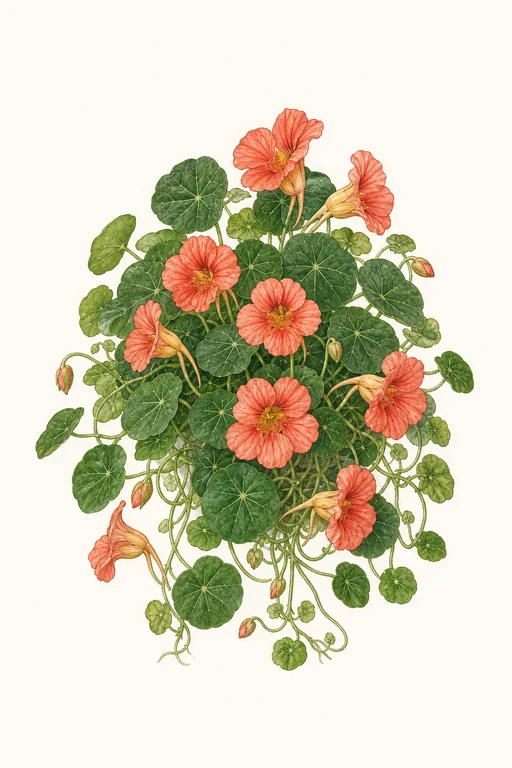
Tender, salmon-pink blossoms glow like small lanterns, and the peppery, watercress-bright flavor follows through with a crisp, juicy bite.
Salmon Baby produces compact, trailing plants that yield abundant blooms and succulent leaves for quick harvest—ideal for bright garnishes, vibrant salads, and quick pickling for a tangy pop. Let it spill over the edge of containers or beds; its lively color and lively bite make every plate feel freshly composed.
Light: Full SunMaturity: 50 DaysHabit: Mounding
Crop Dates : 1b
| Milestone | Date |
|---|---|
| Start Indoors | Direct Sow |
| Last Frost | Jun 1st |
| Transplant / Sow Outdoors | Jun 1st |
| Harvest Begins | Jul 21st |
| Harvest Ends | Aug 1st |
Crop Details
| Trait | Value |
|---|---|
| Days to Maturity | 50 |
| Sun Requirements | Full Sun |
| Growth Habit | Mounding |
| Support Needed | None |
| Planting Depth | Normal |
| Germination Temp (°F) | 70 |
| Min Soil Temp (°F) | 50 |
| Min Night Temp (°F) | 40 |
| Harden Off (days) | Not Required |
Culinary Notes

Chef's Note
These salmon-pink nasturtium blooms are basically edible hot sauce in miniature—peppery, juicy, and vivid enough to cut through fatty proteins. Use them at the last second so the petals stay crisp instead of turning steamy and soft.

Best Uses
- scatter as a live garnish on rich fish or egg dishes
- toss into mixed greens where they’ll hold dressing without wilting fast
- quick-pickle in brine for peppery “instant capers” energy
- fold into herby yogurt or crème fraîche for a punchy, floral snap

Flavor Profile

Kitchen Pairings
Frequently Asked Questions
What pest or disease commonly affects Tropaeolum majus (nasturtium) like “Salmon Baby,” and how can I treat it?
How often should I water Tropaeolum majus during the main growing phase?
How do I know when “Salmon Baby” Tropaeolum majus is ready to harvest?
Sowing Tips

Transplant Conditions
Wait until soil reaches 50°F and nights stay above 40°F before moving outdoors.
Expert Note

For the most vigorous, continuous bloom, sow when soil is warming after frost and avoid rich nitrogen—nasturtiums bloom best in moderate fertility.