
Sea Shells Apricot
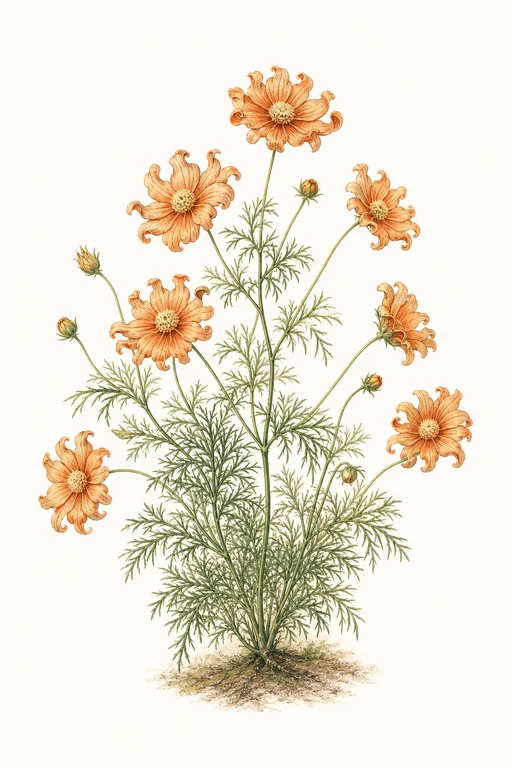
Delicate as lace yet richly abundant, Sea Shells Apricot blooms in warm apricot-orange petals that curl and overlap like tiny seashells, catching the light with a soft, glowing shimmer.
The airy, feathery foliage frames each flower head on sturdy stems, creating a graceful, long-lasting cut-flower presence with a gentle, honeyed allure for pollinators. Grow this annual for a breezy, sunlit display that turns beds and borders into a moving bouquet—ideal for fresh arrangements and effortless garden charm.
Light: Full SunMaturity: 60 DaysHabit: Upright
Crop Dates : 1a
| Milestone | Date |
|---|---|
| Last Frost | Jun 15th |
| Growing Approach | Protected Environment Only |
Crop Details
| Trait | Value |
|---|---|
| Days to Maturity | 60 |
| Sun Requirements | Full Sun |
| Growth Habit | Upright |
| Support Needed | None |
| Planting Depth | Surface |
| Germination Temp (°F) | 70 |
| Min Soil Temp (°F) | 55 |
| Min Night Temp (°F) | 50 |
| Harden Off (days) | Not Required |
Culinary Notes

Chef's Note
Treat the petals like you would delicate edible flowers: use sparingly so their lacey sweetness and faint bitterness reads, not smothers. They’re best chilled or lightly dressed—heat turns them tired fast.

Best Uses
- chopped petal garnish for plated fish or roast chicken
- floating in chilled drinks or sparkling water for a soft perfume
- folded into a quick salad where the petals won’t weigh down dressing
- used as an elegant, delicate accent in crème fraîche– or yogurt-based sauces

Flavor Profile

Frequently Asked Questions
What pest or disease commonly affects Cosmos bipinnatus, and what should I do if I see it?
How often should I water Cosmos bipinnatus during the main growing phase?
How can I tell when Cosmos bipinnatus is ready to harvest?
Sowing Tips

Transplant Conditions
Wait until soil reaches 55°F and nights stay above 50°F before moving outdoors.
Expert Note

Cosmos establishes best with minimal root disturbance—direct-sow for sturdier stems and earlier blooming in most climates.