
Serenade Mix
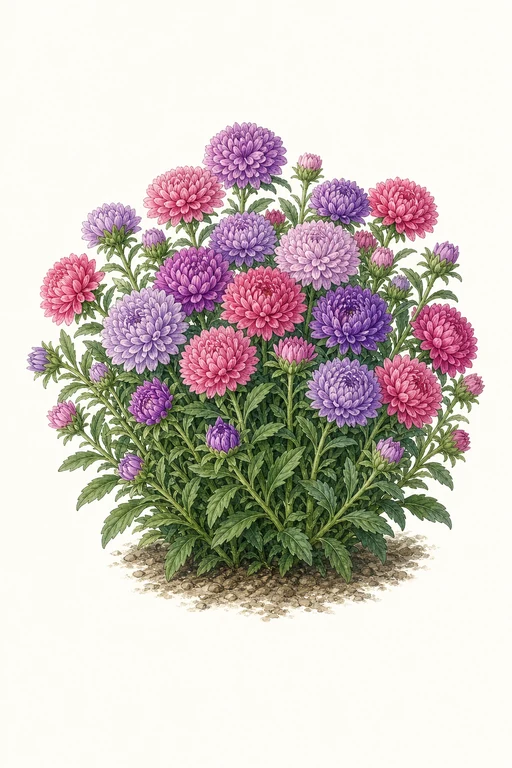
A cloud of color with a soft, velvety double bloom—Serenade Mix dazzles from late summer into early fall with richly layered petals that feel almost plush at first glance.
Compact and well-branched, this dwarf double aster forms tidy mounds of flower heads in a lively mix of hues, offering long-lasting garden presence and dependable cut-flower beauty. Grow it for abundant, showy blossoms that bring instant curb appeal and a steady rhythm of color through the season.
Light: Full SunMaturity: 85 DaysHabit: Upright
Planting schedules and alerts are optimized for Columbus (Zone 6b).
Crop Dates
| Milestone | Date |
|---|---|
| Start Indoors | Mar 14th |
| Last Frost | Apr 25th |
| Transplant / Sow Outdoors | Apr 25th |
| Harvest Begins | Jul 19th |
| Harvest Ends | Oct 16th |
Crop Details
| Trait | Value |
|---|---|
| Days to Maturity | 85 |
| Sun Requirements | Full Sun |
| Growth Habit | Upright |
| Support Needed | None |
| Planting Depth | Normal |
| Germination Temp (°F) | 65 |
| Min Soil Temp (°F) | 55 |
| Min Night Temp (°F) | 40 |
| Harden Off (days) | 7 |
Culinary Notes

Chef's Note
Treat Serenade Mix like a perfume: use the petals with a light hand so the flavor stays bright and floral rather than green. The plush double blooms are best as a garnish or quick-touch sweet application—think sugared or mixed into cold/room-temp dishes where their texture doesn’t collapse.

Best Uses
- crystalized or lightly sugared petals for plated desserts
- mixed into rice or grain salads for a color-sweet pop
- torn fresh as a garnish over creamy soups (the petals stay textural)
- layered into champagne or citrus spritz cocktails as edible confetti

Flavor Profile

Kitchen Pairings
Frequently Asked Questions
What pest or disease commonly affects Callistephus chinensis (aster mix), and what should I do?
How often should I water Callistephus chinensis during the main growing phase?
How can I tell when Callistephus chinensis is ready to harvest for cut flowers?
Sowing Tips

Transplant Conditions
Wait until soil reaches 55°F and nights stay above 40°F before moving outdoors. Harden off for 7 days first.
Expert Note

Start indoors for earlier flowering, then transplant only after nights are reliably mild and protect young plants from cold snaps.