
Shamrock
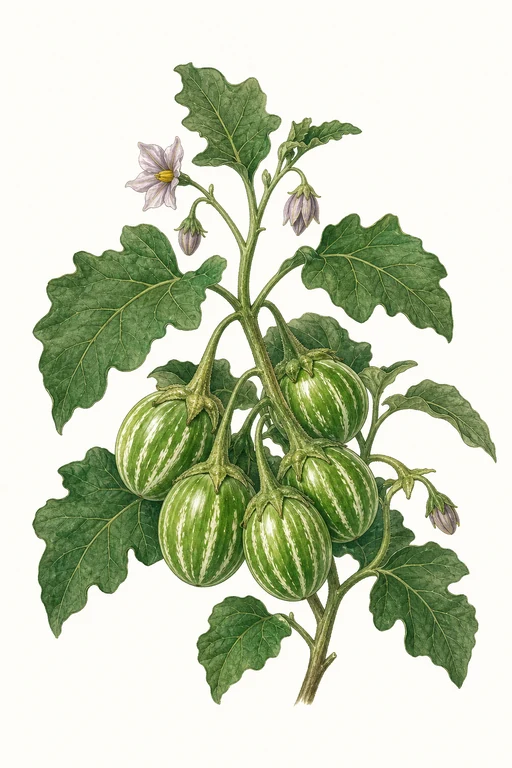
A velvet-smooth, thumb-sized marvel, Shamrock eggplant ripens to a bright, shamrock-green skin that’s boldly wrapped in creamy white striping—so vivid it feels lit from within.
The flesh is tender and creamy with a mild, sweet-leaning eggplant flavor, ideal for high-heat roasting and also delightful fresh when you want a crisp, delicate bite. Grow Shamrock for its show-stopping fruiting habit and its elegant, stripe-forward presence in the garden and on the plate.
Light: Full SunMaturity: 75 DaysHabit: Upright
Planting schedules and alerts are optimized for Columbus (Zone 6b).
Crop Dates
| Milestone | Date |
|---|---|
| Start Indoors | Mar 7th |
| Last Frost | Apr 25th |
| Transplant / Sow Outdoors | Jun 20th |
| Harvest Begins | Sep 3rd |
| Harvest Ends | Oct 16th |
Crop Details
| Trait | Value |
|---|---|
| Days to Maturity | 75 |
| Sun Requirements | Full Sun |
| Growth Habit | Upright |
| Support Needed | Stake |
| Planting Depth | Normal |
| Germination Temp (°F) | 80 |
| Min Soil Temp (°F) | 60 |
| Min Night Temp (°F) | 50 |
| Harden Off (days) | 10 |
Culinary Notes

Chef's Note
Shamrock’s smaller, tender fruit gives you eggplant that roasts fast—edges go lacquered and golden while the center stays creamy instead of turning spongy. Use it hot for caramelized silk or treat it raw/shaved where its mild sweetness and delicate crunch actually show off.

Best Uses
- high-heat roasting until edges caramelize and the interior turns custardy
- quick-grill/char for smoky slices that don’t collapse
- lightly dressed raw or shaved preparations to keep a crisp, elegant crunch

Flavor Profile

Kitchen Pairings
Frequently Asked Questions
What pest or disease commonly affects Solanum melongena (eggplant/shamrock), and how do I control it at home?
How often should I water Solanum melongena during the main growing phase, and what soil moisture level should I aim for?
How can I tell when my Solanum melongena/shamrock is ready to harvest?
Sowing Tips

Transplant Conditions
Wait until soil reaches 60°F and nights stay above 50°F before moving outdoors. Harden off for 10 days first.
Expert Note

Start eggplant 7–8 weeks indoors, then transplant only when night temps stay near/above 50°F and soil is 60°F+ to avoid stunting.