
Shunkyo
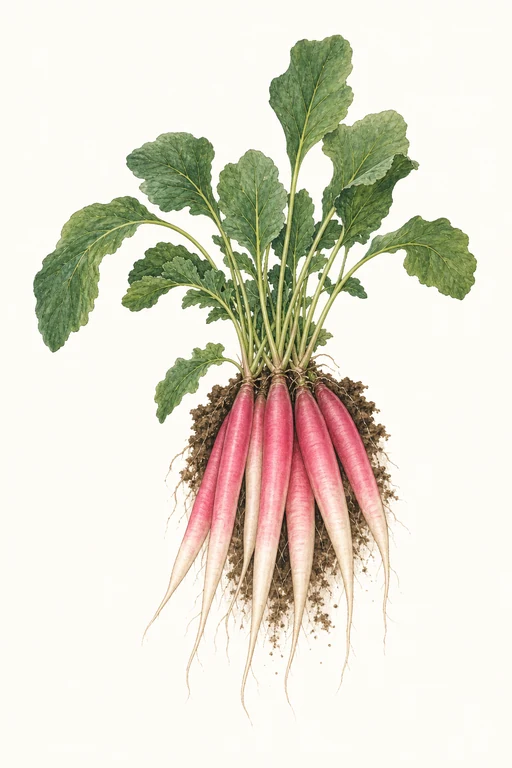
Crisp as glass and bright as spring—Shunkyo radish delivers a clean, peppery snap with a sweet, fresh finish.
At about 45 days, its slender roots form with a smooth, satiny skin and a vivid, eye-catching color that stays tender rather than woody. Ideal for salad radish use, Shunkyo shines when served fresh for crunchy platters, vibrant garnishes, and quick pickling for a tangy bite.
Light: Full SunMaturity: 45 DaysHabit: Taproot
Location not set yet
Location not set yet
Enter your ZIP for local crop dates
Shunkyo Planting Dates by USDA Zone
Estimated US hardiness-zone windows for sow, transplant, and harvest. Enter a US ZIP above for exact local dates, or open a zone below.
| Zone | Start Indoors | Sow / Transplant | Harvest |
|---|---|---|---|
| Zone 1a | Protected Environment Only | ||
| Zone 1b | Direct Sow | Jun 1st | Jul 16th – Aug 1st |
| Zone 2a | Direct Sow | May 25th | Jul 9th – Aug 29th |
| Zone 2b | Direct Sow | May 15th | Jun 29th – Aug 25th |
| Zone 3a | Direct Sow | May 15th | Jun 29th – Sep 1st |
| Zone 3b | Direct Sow | May 19th | Jul 3rd – Sep 21st |
| Zone 4a | Direct Sow | May 15th | Jun 29th – Sep 24th |
| Zone 4b | Direct Sow | May 13th | Jun 27th – Sep 27th |
| Zone 5a | Direct Sow | May 8th | Jun 22nd – Sep 30th |
| Zone 5b | Direct Sow | May 4th | Jun 18th – Oct 5th |
| Zone 6a | Direct Sow | May 1st | Jun 15th – Oct 10th |
| Zone 6b | Direct Sow | Apr 25th | Jun 9th – Oct 16th |
| Zone 7a | Direct Sow | Apr 20th | Jun 4th – Oct 20th |
| Zone 7b | Direct Sow | Apr 10th | May 25th – Oct 28th |
| Zone 8a | Direct Sow | Apr 1st | May 16th – Nov 5th |
| Zone 8b | Direct Sow | Mar 23rd | May 7th – Nov 12th |
| Zone 9a | Direct Sow | Mar 6th | Apr 20th – Nov 26th |
| Zone 9b | Direct Sow | Feb 9th | Mar 26th – Dec 9th |
| Zone 10a | — | Oct 1st | Nov 15th – Feb 28th |
| Zone 10b | — | Oct 1st | Nov 15th – Feb 28th |
| Zone 11a | — | Oct 1st | Nov 15th – Feb 28th |
| Zone 11b | — | Oct 1st | Nov 15th – Feb 28th |
| Zone 12a | — | Oct 1st | Nov 15th – Feb 28th |
| Zone 12b | — | Oct 1st | Nov 15th – Feb 28th |
| Zone 13a | — | Oct 1st | Nov 15th – Feb 28th |
| Zone 13b | — | Oct 1st | Nov 15th – Feb 28th |
Crop Details
| Trait | Value |
|---|---|
| Days to Maturity | 45 |
| Sun Requirements | Full Sun |
| Growth Habit | Taproot |
| Support Needed | None |
| Planting Depth | Normal |
| Germination Temp (°F) | 50 |
| Min Soil Temp (°F) | 40 |
| Min Night Temp (°F) | 28 |
| Harden Off (days) | Not Required |
Culinary Notes

Chef's Note
Shunkyo’s slender roots stay tender and never go chalky, so you can serve it raw without fighting toughness. The clean peppery snap loves dairy fat and quick acid—thin slices won’t wilt into the bowl, and pickled bits stay snappy even after a short turn in the brine.

Best Uses
- shaved or sliced raw on crunchy platters and composed salads
- quick pickling for a fast, tangy crunch
- eaten whole as a snack radish with flaky salt and citrus
- lightly dressed radish-and-herb garnishes where the crunch must hold

Flavor Profile

Kitchen Pairings
Frequently Asked Questions
What pest or disease is most common on radish (Raphanus sativus) and how can I stop it?
How often should I water radish (Raphanus sativus) during the main growing phase?
How can I tell when radish (Raphanus sativus) is ready to harvest?
Sowing Tips

Transplant Conditions
Wait until soil reaches 40°F and nights stay above 28°F before moving outdoors.
Expert Note

Sow directly in cool weather and keep soil evenly moist to prevent pithiness and excessive heat-spice.