
Sicilian Eggplant
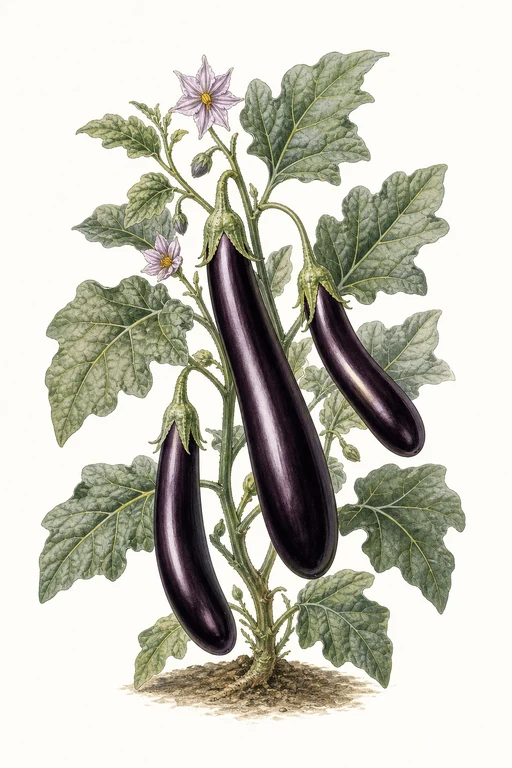
Sink your senses into Sicilian Eggplant’s glossy, ink-purple fruit—sleek as polished lacquer and beautifully elongated, with a firm, creamy interior that turns tender and rich when cooked.
The flesh is notably mild and velvety, ideal for classic Italian preparations where its shape shines in hearty slices and layered dishes. Grow it for a steady harvest over the season, and enjoy the satisfying contrast of satin skin and succulent, spoonable texture.
Light: Full SunMaturity: 95 DaysHabit: Indeterminate
Planting schedules and alerts are optimized for Columbus (Zone 6b).
Crop Dates
| Milestone | Date |
|---|---|
| Start Indoors | Mar 7th |
| Last Frost | Apr 25th |
| Transplant / Sow Outdoors | Jun 20th |
| Harvest Begins | Sep 23rd |
| Harvest Ends | Oct 16th |
Crop Details
| Trait | Value |
|---|---|
| Days to Maturity | 95 |
| Sun Requirements | Full Sun |
| Growth Habit | Indeterminate |
| Support Needed | Stake |
| Planting Depth | Normal |
| Germination Temp (°F) | 80 |
| Min Soil Temp (°F) | 60 |
| Min Night Temp (°F) | 50 |
| Harden Off (days) | 10 |
Culinary Notes

Chef's Note
Sicilian Eggplant brings a hushed, creamy sweetness and a mild palate that plays nicely with assertive Italian inputs—olive oil, garlic, and tomato—without fighting them. Its flesh turns rich and spoonable once cooked, so it’s a standout for parm-style layering and for roasts where you want the exterior to bronze while the center stays silky.

Best Uses
- long, glossy slices for roasting and pan-searing until bronzed and creamy inside
- breaded cutlets or “eggplant parm” style stacks where the flesh becomes spoonable
- grilled rounds that hold their shape and soak up charred olive oil
- slow-braised in tomato sauce for a thick, clingy finish

Flavor Profile

Frequently Asked Questions
What pest or disease most commonly affects Solanum melongena (eggplant), and how do I manage it at home?
How often should I water Sicilian eggplant during the main growing phase (roughly the warm, flowering/fruiting period)?
How can I tell when Sicilian eggplant (Solanum melongena) is ready to harvest?
Sowing Tips

Transplant Conditions
Wait until soil reaches 60°F and nights stay above 50°F before moving outdoors. Harden off for 10 days first.
Expert Note

For best results, transplant only once soil is consistently warm (around 60°F+) and keep plants evenly watered to prevent bitter, seedy fruit.