
Sierra Norte
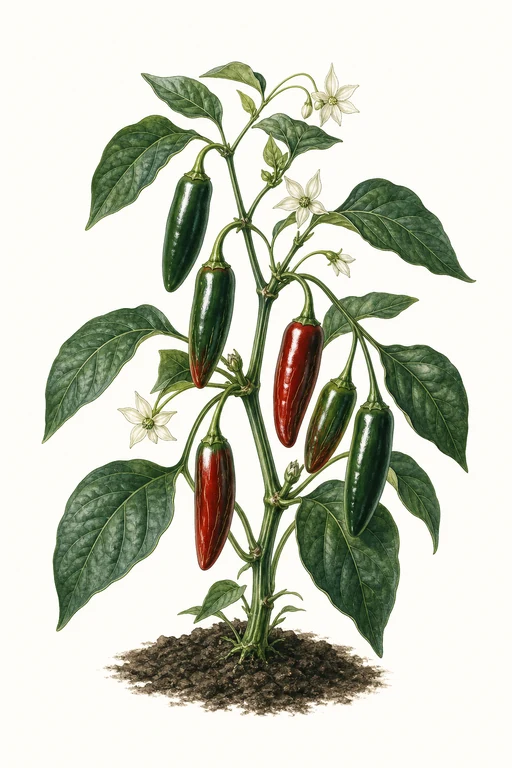
Aromatic and vividly alive on the plant, Sierra Norte jalapeños ripen to a glossy, medium-deep green that turns to a warm, ripe red with a satisfying sheen.
Expect a bright, peppery heat with a crisp, juicy bite—ideal for fresh salsas, roasted chile-forward flavor, and bold pickling where their firm walls hold shape and color. Grow Sierra Norte for dependable harvests and a fiery, garden-to-jar intensity that feels unmistakably varietal.
Light: Full SunMaturity: 75 DaysHabit: Bush
Crop Dates : 13b
| Milestone | Date |
|---|---|
| Climate | Frost-Free Climate |
| Growing Approach | Continuous Production |
Crop Details
| Trait | Value |
|---|---|
| Days to Maturity | 75 |
| Sun Requirements | Full Sun |
| Growth Habit | Bush |
| Support Needed | Stake |
| Planting Depth | Normal |
| Germination Temp (°F) | 80 |
| Min Soil Temp (°F) | 60 |
| Min Night Temp (°F) | 50 |
| Harden Off (days) | 10 |
Culinary Notes

Chef's Note
Sierra Norte jalapeños hit with clean, bright pepper heat and a juicy snap—so they’re built for raw chop or brief heat where their walls don’t turn mushy. Their green-to-red ripeness means you get a little sweet bounce alongside the bite, which makes them especially strong for salsa and pepper brine.

Best Uses
- fresh salsa where they stay snappy instead of collapsing
- roasting or blistering for smoky, chile-forward flavor that tastes vivid even after chopping
- quick-pickling or canning in vinegar brine to keep firm walls and a glossy color
- finishing chopped over tacos, eggs, or grilled meats for immediate burn and crunch

Flavor Profile

Frequently Asked Questions
How do I prevent and treat blossom-end rot and bacterial spot on Capsicum annuum (jalapeño)?
During the main growing phase for Capsicum annuum, how often should I water and what soil moisture level should I aim for?
How can I tell when my jalapeño peppers (Capsicum annuum) are ready to harvest?
Sowing Tips

Transplant Conditions
Wait until soil reaches 60°F and nights stay above 50°F before moving outdoors. Harden off for 10 days first.
Expert Note

Because jalapeños are cold-sensitive even when days to maturity are shorter, wait to transplant until soil is truly warm (around 60°F+) and protect from cool nights with cloches or row cover.