
Snake Gourd
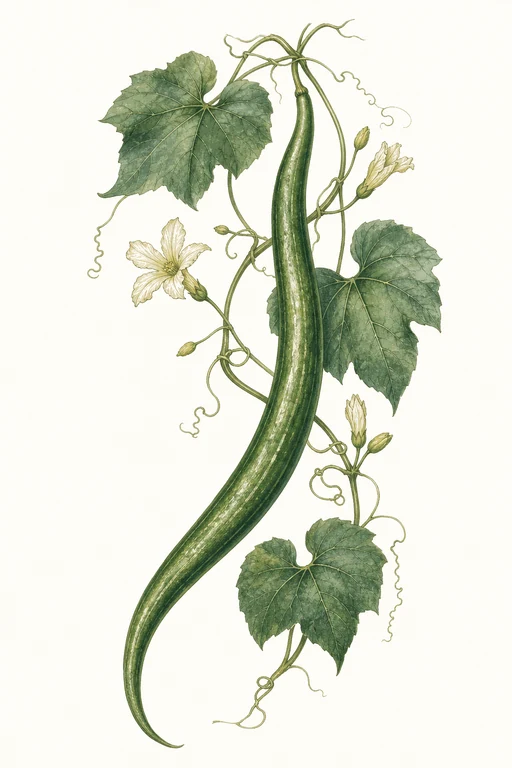
Fragrant and cool to the eye, Snake Gourd grows into long, graceful fruits with a tender, crisp bite and a mild, refreshing flavor that welcomes bold seasonings.
At maturity, the skin stays pleasantly yielding and the flesh turns delightfully succulent—ideal for quick stir-ins, savory curries, and comforting soups, as well as crunchy pickling when you want a bright, tangy snap. Train it on a sunny trellis and enjoy the steady harvest rhythm from a vigorous, vining plant.
Light: Full SunMaturity: 70 DaysHabit: Vine
Planting schedules and alerts are optimized for Columbus (Zone 6b).
Crop Dates
| Milestone | Date |
|---|---|
| Start Indoors | Apr 25th |
| Last Frost | Apr 25th |
| Transplant / Sow Outdoors | May 9th |
| Harvest Begins | Jul 18th |
| Harvest Ends | Oct 16th |
Crop Details
| Trait | Value |
|---|---|
| Days to Maturity | 70 |
| Sun Requirements | Full Sun |
| Growth Habit | Vine |
| Support Needed | Trellis |
| Planting Depth | Normal |
| Germination Temp (°F) | 70 |
| Min Soil Temp (°F) | 65 |
| Min Night Temp (°F) | 55 |
| Harden Off (days) | 10 |
Culinary Notes

Chef's Note
Snake gourd is all about texture: it stays juicy and crispier than you’d expect, so you want fast cooking or quick simmering before it turns silky. Season aggressively—garlic, ginger, chili, and citrus are what make its mild, refreshing flesh taste alive.

Best Uses
- quick high-heat stir-fries where it stays snappy
- savory curries/soups that need the flesh to soften without collapsing
- crunchy pickles for a bright, tangy bite
- thin half-moons in hot-and-sour or garlic-chili preparations

Flavor Profile

Kitchen Pairings
Frequently Asked Questions
What pests commonly attack Lagenaria siceraria (snake gourd), and how can I control them?
How often should I water snake gourd during the main growing phase (after flowering begins)?
How do I know when to harvest snake gourd (Lagenaria siceraria)?
Sowing Tips

Transplant Conditions
Wait until soil reaches 65°F and nights stay above 55°F before moving outdoors. Harden off for 10 days first.

Direct Sow Preferred
Sensitive roots — does not transplant well. If starting indoors, use biodegradable pots and disturb roots as little as possible when moving outdoors.
Expert Note

Start in warm conditions and trellis early so the long fruit stays straight and reduces rot versus ground-growing.