
Snow White
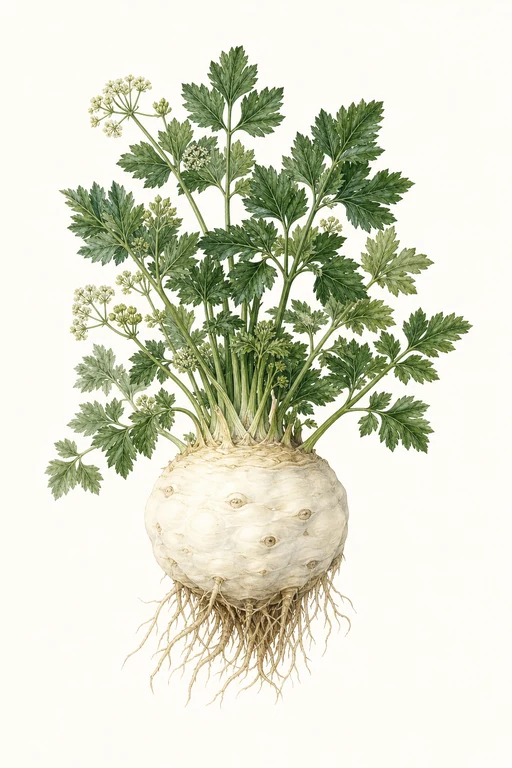
Snow White celeriac brings a striking, creamy-white presence from the garden—clean, mild, and delicately nutty in flavor with a crisp, fine-grained texture.
Its firm, rounded root develops a smooth, even skin that peels beautifully, making it a favorite for roasting to golden tenderness or grating into fresh salads for a cool, celery-bright bite. Grow Snow White for a dependable 110-day season and a harvest that looks as refined as it tastes—ideal for velvety purées, comforting soups, and tangy pickles alike.
Light: Full SunMaturity: 110 DaysHabit: Bulbing
Planting schedules and alerts are optimized for Columbus (Zone 6b).
Crop Dates
| Milestone | Date |
|---|---|
| Start Indoors | Feb 14th |
| Last Frost | Apr 25th |
| Transplant / Sow Outdoors | Apr 18th |
| Harvest Begins | Aug 6th |
| Harvest Ends | Oct 16th |
Crop Details
| Trait | Value |
|---|---|
| Days to Maturity | 110 |
| Sun Requirements | Full Sun |
| Growth Habit | Bulbing |
| Support Needed | None |
| Planting Depth | Normal |
| Germination Temp (°F) | 75 |
| Min Soil Temp (°F) | 40 |
| Min Night Temp (°F) | 28 |
| Harden Off (days) | 7 |
Culinary Notes

Chef's Note
Snow White celeriac is mild and nutty with a tight, fine-grained texture—so it holds up to roasting without turning woolly and purees into something genuinely silky. Its delicate celery brightness loves sharp acid and herb lift, which keeps it from tasting flat next to richer fats.

Best Uses
- roast wedges until deeply golden, then puree for a velvety side
- grate raw for a cool, celery-bright salad that stays snappy
- potato-style soups—blend smooth with a light hand
- quick pickling for tangy, crisp slices

Flavor Profile

Frequently Asked Questions
What pests or diseases commonly affect celeriac (Apium graveolens var. rapaceum), and how can I control them?
How often should I water celeriac during its main growth phase to prevent a woody, cracked bulb?
How do I know when my celeriac (Apium graveolens var. rapaceum) is ready to harvest?
Sowing Tips

Transplant Conditions
Wait until soil reaches 40°F and nights stay above 28°F before moving outdoors. Harden off for 7 days first.
Expert Note

Keep celeriac consistently watered and consider blanching/earthing-up to reduce exposure that can cause discoloration.