
Spanish Black
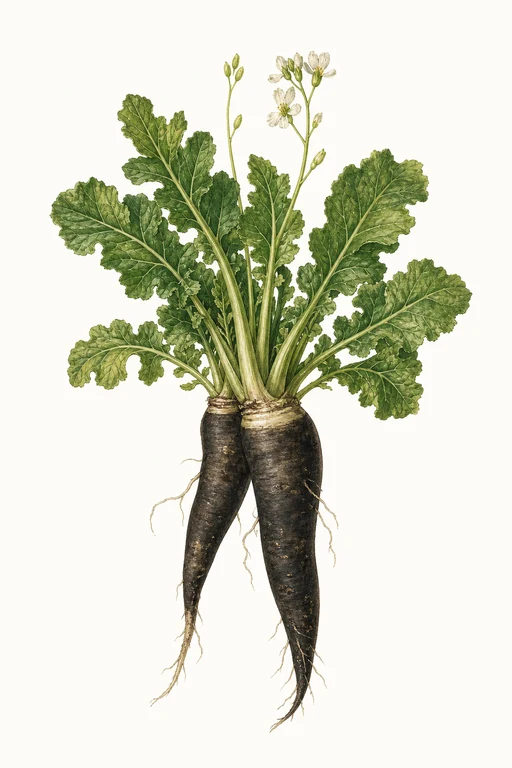
Sink your senses into Spanish Black’s velvety, ink-dark roots—deep as polished slate—set beneath a crown of crisp green leaves.
The flesh is clean and bright, with a refreshing bite that turns mellow and sweet when roasted, and stays lively for fresh slicing. Grow Spanish Black for bold flavor in root-forward dishes, for roasting trays, and for striking pickles that showcase its dramatic color from garden to jar.
Light: Full SunMaturity: 70 DaysHabit: Rosette
Crop Dates : 6a
| Milestone | Date |
|---|---|
| Start Indoors | Direct Sow |
| Last Frost | May 1st |
| Transplant / Sow Outdoors | May 1st |
| Harvest Begins | Jul 10th |
| Harvest Ends | Oct 10th |
Crop Details
| Trait | Value |
|---|---|
| Days to Maturity | 70 |
| Sun Requirements | Full Sun |
| Growth Habit | Rosette |
| Support Needed | None |
| Planting Depth | Normal |
| Germination Temp (°F) | 45 |
| Min Soil Temp (°F) | 40 |
| Min Night Temp (°F) | 28 |
| Harden Off (days) | Not Required |
Culinary Notes

Chef's Note
Spanish Black reads as peppery and crisp raw, then softens into sweet, toasted earth when you roast it—so it lives comfortably on both ends of the temperature dial. Choose it when you want a radish that holds crunch for slicing or turns plush at the edges without collapsing.

Best Uses
- fresh slicing with salt and a slick of olive oil—keep it snappy, not wilted
- roasting whole or in thick chunks until the surface browns and the interior turns buttery
- quick-pickles or refrigerator pickles to lock in that ink-dark drama and tang
- grating into creamy sauces (yogurt/sour cream) to make a sharp, cooling condiment

Flavor Profile

Kitchen Pairings
Frequently Asked Questions
Why are my Raphanus sativus (Spanish Black radish) leaves getting pale, mottled, and distorted, and what can I do?
How often should I water Spanish Black radish during active root growth to prevent cracking or pithiness?
When is Spanish Black radish (Raphanus sativus) ready to harvest, and how can I confirm it?
Sowing Tips

Transplant Conditions
Wait until soil reaches 40°F and nights stay above 28°F before moving outdoors.
Expert Note

Black radish forms best with steady moisture—avoid letting it dry out or it can get woody and overly pungent.