
Spanish
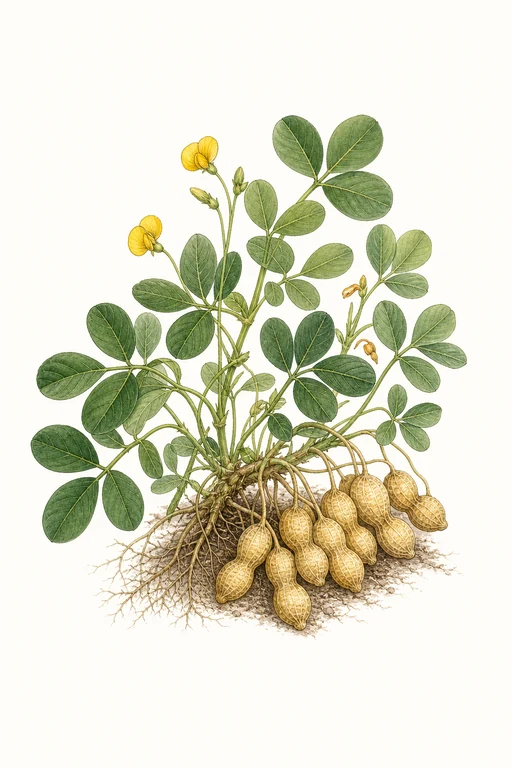
Warm, sun-kissed pods of Spanish Peanut fill out with a satisfying, velvety crunch and a distinctly sweet, nutty depth.
When shelled, the kernels offer a smooth, buttery texture with a gentle roast-ready richness that shines in classic peanut favorites—snacking, roasting, and grinding for spreads and sauces. A patient 120-day journey rewards home gardeners with dependable harvests and a pantry staple you’ll reach for again and again.
Light: Full SunMaturity: 120 DaysHabit: Upright
Planting schedules and alerts are optimized for Columbus (Zone 6b).
Crop Dates
| Milestone | Date |
|---|---|
| Start Indoors | Direct Sow |
| Last Frost | Apr 25th |
| Transplant / Sow Outdoors | Apr 25th |
| Harvest Begins | Aug 23rd |
| Harvest Ends | Oct 16th |
Crop Details
| Trait | Value |
|---|---|
| Days to Maturity | 120 |
| Sun Requirements | Full Sun |
| Growth Habit | Upright |
| Support Needed | None |
| Planting Depth | Normal |
| Germination Temp (°F) | 75 |
| Min Soil Temp (°F) | 65 |
| Min Night Temp (°F) | 60 |
| Harden Off (days) | Not Required |
Culinary Notes

Chef's Note
Spanish peanuts lean sweeter and smoother than many standard kernels, so they grind into a silky spread without tasting flat or chalky. Roast them until they go fragrant and nutty—then they’ll hold their crunch or melt into sauce with that buttery, warm finish.

Best Uses
- dry-roasting for snacking and salad crunch
- shallow-frying or caramel-toasting for candied peanut vibes
- grinding into smooth peanut butter-style spreads
- blending into satay-style sauces and peanut noodles

Flavor Profile

Kitchen Pairings
Frequently Asked Questions
What pest or disease most commonly affects Arachis hypogaea (peanuts), and how can I control it?
How often should I water Arachis hypogaea during the main growing phase, and what soil moisture level should I aim for?
How do I tell when Arachis hypogaea is ready to harvest?
Sowing Tips

Transplant Conditions
Wait until soil reaches 65°F and nights stay above 60°F before moving outdoors.
Expert Note

Direct sow Spanish peanuts after soil warms to prevent poor germination and root rot, and keep the soil lightly moist until flowering begins.