
Starlet
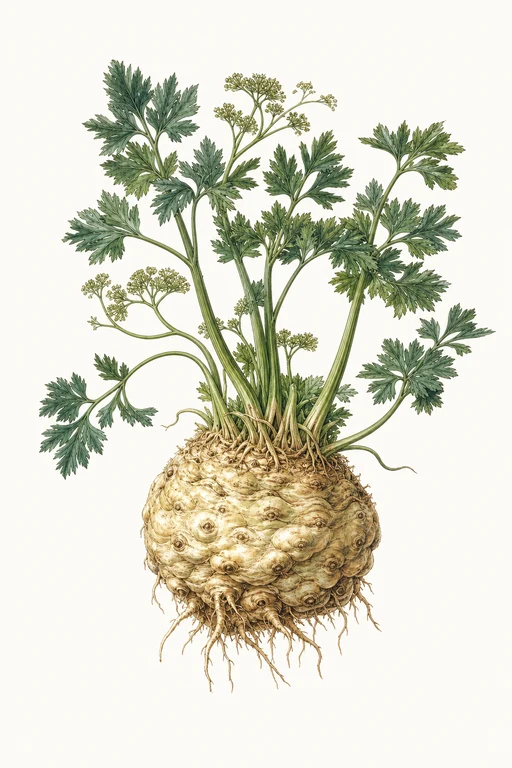
Aromatically rich and beautifully knobby, Starlet celeriac forms a dense, turnip-like crown with a creamy interior that tastes deeply of celery—earthy, nutty, and gently sweet.
The flesh stays pleasantly firm and fine-grained, making it ideal for roasting until bronzed at the edges, or for silky purées and gratins where its signature celery perfume shines. Grow Starlet for a dependable 110-day harvest and a handsome winter-ready root that stores well for savoring long after the first cool nights.
Light: Part SunMaturity: 110 DaysHabit: Upright
Planting schedules and alerts are optimized for Columbus (Zone 6b).
Crop Dates
| Milestone | Date |
|---|---|
| Start Indoors | Feb 14th |
| Last Frost | Apr 25th |
| Transplant / Sow Outdoors | Apr 25th |
| Harvest Begins | Aug 13th |
| Harvest Ends | Oct 16th |
Crop Details
| Trait | Value |
|---|---|
| Days to Maturity | 110 |
| Sun Requirements | Part Sun |
| Growth Habit | Upright |
| Support Needed | None |
| Planting Depth | Normal |
| Germination Temp (°F) | 70 |
| Min Soil Temp (°F) | 45 |
| Min Night Temp (°F) | 35 |
| Harden Off (days) | 7 |
Culinary Notes

Chef's Note
Starlet celeriac tastes like celery turned up and grounded—earthy, nutty, and gently sweet—while staying firm enough to caramelize at the edges. Purée it or gratin it and it’ll give you that celery-scented, spoon-coating texture without collapsing into a watery mash.

Best Uses
- roast slices or cubes until bronzed and caramel-edged, then finish with salt and butter
- silky purée (press and warm through) where the celery aroma stays bright
- gratin in a creamy base so the root’s firmness holds the fork
- winter slaws shaved thin—its crunch plays well with bold dressings

Flavor Profile

Frequently Asked Questions
What pest or disease commonly hits celery root (Apium graveolens var. rapaceum), and how can I manage it?
How often should I water celery root during the main growing phase, and what soil moisture level should I aim for?
How do I tell when celery root (Apium graveolens var. rapaceum) is ready to harvest?
Sowing Tips

Transplant Conditions
Wait until soil reaches 45°F and nights stay above 35°F before moving outdoors. Harden off for 7 days first.
Expert Note

For compact container celery like ‘Starlet,’ keep soil evenly moist and avoid letting the stems dry out—consistent moisture is the key to tender stalks.