
Stuttgarter
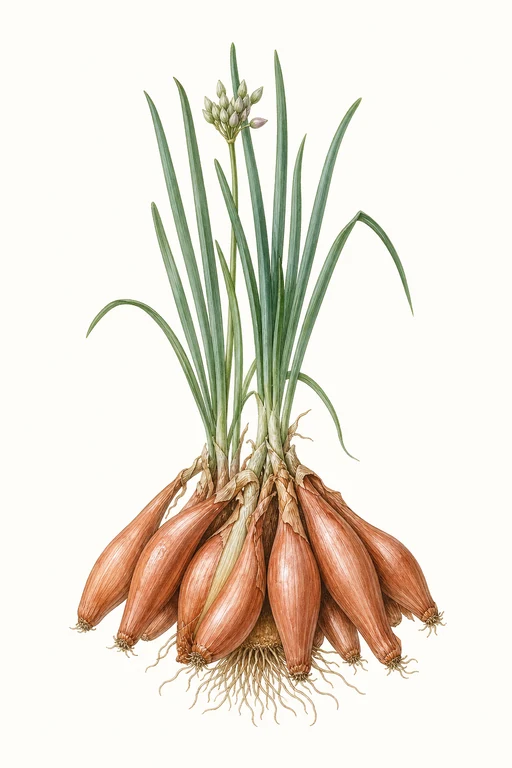
Aromatic and richly mellow, Stuttgarter shallots bring a sweet-onion depth with a gentle, lingering fragrance that perfumes the air as they’re lifted from the soil.
The bulbs form neat, elongated clusters with a papery, coppery-brown skin and a crisp, fine-textured interior—ideal for turning into silky sauces, caramelized roasts, or quick pickles where their flavor stays bright and rounded. Grow Stuttgarter for a dependable, garden-to-jar harvest that rewards patient timing with elegant, kitchen-ready bulbs.
Light: Full SunMaturity: 120 DaysHabit: Bulbing
Planting schedules and alerts are optimized for Columbus (Zone 6b).
Crop Dates
| Milestone | Date |
|---|---|
| Start Indoors | Direct Sow |
| Last Frost | Apr 25th |
| Transplant / Sow Outdoors | Apr 25th |
| Harvest Begins | Aug 23rd |
| Harvest Ends | Oct 16th |
Crop Details
| Trait | Value |
|---|---|
| Days to Maturity | 120 |
| Sun Requirements | Full Sun |
| Growth Habit | Bulbing |
| Support Needed | None |
| Planting Depth | Normal |
| Germination Temp (°F) | 75 |
| Min Soil Temp (°F) | 45 |
| Min Night Temp (°F) | 28 |
| Harden Off (days) | Not Required |
Culinary Notes

Chef's Note
Stuttgarter shallots hit that sweet spot—fragrant and mellow—so they melt into sauces instead of turning sharp. Use them when you want onion flavor that stays elegant, perfuming butter, wine, and vinegar rather than dominating the plate.

Best Uses
- silky shallot reduction for pan sauces and beurre blanc–style finishes
- caramelized roast shallots (high heat, slow turn) where they jam into jammy edges
- quick pickling for bright, rounded tang without harsh onion sharpness
- thin slicing raw in vinaigrette or buttered bread so they stay aromatic, not aggressive

Flavor Profile

Frequently Asked Questions
What pests or diseases commonly affect Allium cepa var. aggregatum (Stuttgarter onions/shallot-type), and how can I manage them at home?
During the main growing phase, how often should I water Allium cepa var. aggregatum, and what soil moisture level should I maintain?
How do I tell when Stuttgarter onions (Allium cepa var. aggregatum) are ready to harvest?
Sowing Tips

Transplant Conditions
Wait until soil reaches 45°F and nights stay above 28°F before moving outdoors.
Expert Note

For Stuttgarter (storage) onion, plant sets/early seedlings as soon as soil is workable and firm, then keep soil evenly moist to build a tight, well-dried bulb for long storage.