
Sultana
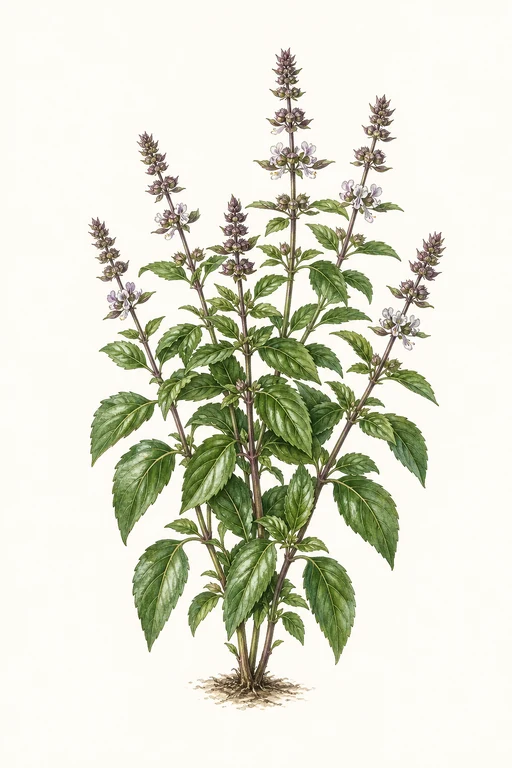
Aromatic and luminous, Sultana Thai Basil fills the garden with a sweet, spicy perfume—cool anise-coolness meeting warm clove and citrus-green brightness.
At maturity, its tender leaves form an upright, branching habit with a satiny sheen and a gently serrated edge, offering a delicate bite that shines in fresh applications and quick stir-ins, as well as fragrant sauces and herb-forward garnishes. Grow Sultana for a steady harvest rhythm and a bold, unmistakable basil character that elevates every bowl it graces.
Light: Full SunMaturity: 45 DaysHabit: Upright
Crop Dates : 3b
| Milestone | Date |
|---|---|
| Start Indoors | May 5th |
| Last Frost | May 19th |
| Transplant / Sow Outdoors | Jun 30th |
| Harvest Begins | Aug 14th |
| Harvest Ends | Sep 21st |
Crop Details
| Trait | Value |
|---|---|
| Days to Maturity | 45 |
| Sun Requirements | Full Sun |
| Growth Habit | Upright |
| Support Needed | None |
| Planting Depth | Normal |
| Germination Temp (°F) | 75 |
| Min Soil Temp (°F) | 60 |
| Min Night Temp (°F) | 50 |
| Harden Off (days) | 10 |
Culinary Notes

Chef's Note
Sultana Thai basil is built for late heat—its cool anise and clove warmth stay luminous when you treat it like a finisher, not a simmering ingredient. Chop finely and scatter generously: the tender leaf gives that satiny, gently serrated bite that perfumes whatever it touches.

Best Uses
- quick stir-ins at the end of a wok so the anise-citrus stays bright
- Thai-style herb garnish on noodles and grilled proteins
- fast blitzed basil-citrus oil or fragrant pesto-style sauce
- muddled into cold drinks or syrups where its perfume cuts sweetness

Flavor Profile

Kitchen Pairings
Frequently Asked Questions
What pests or diseases most often hit Ocimum basilicum (sultana basil), and how can I manage them at home?
How often should I water Ocimum basilicum during the main growing phase, and what soil moisture target should I aim for?
When is Ocimum basilicum ready to harvest (and how do I harvest to keep plants producing)?
Sowing Tips

Transplant Conditions
Wait until soil reaches 60°F and nights stay above 50°F before moving outdoors. Harden off for 10 days first.
Expert Note

Grow Sultana basil warm and protected at first—transplant only when nights stay above 50°F and keep evenly moist to maximize large-leaf growth and harvest quality.