
Swan Gourd
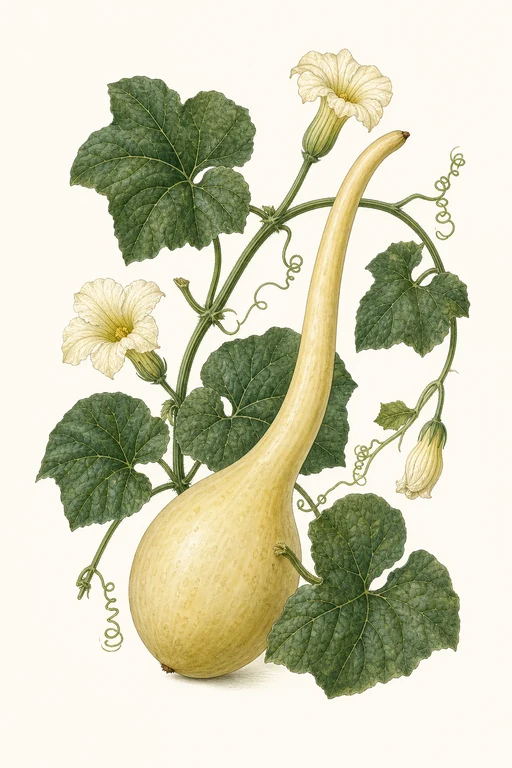
Fragrant, pale blossoms open to reveal a graceful, swan-neck silhouette—then the fruit matures into Swan Gourd’s unmistakable long, elegant curve with a smooth, waxy skin.
The flesh is tender and lightly sweet, with a clean, mild flavor that welcomes both fresh use and warm preparations; it turns silky when cooked and holds its shape beautifully for hearty dishes. Grow Swan Gourd for its show-stopping form and its versatile, garden-to-table appeal—an heirloom-worthy centerpiece that rewards patience at about 120 days.
Light: Full SunMaturity: 120 DaysHabit: Vine
Planting schedules and alerts are optimized for Columbus (Zone 6b).
Crop Dates
| Milestone | Date |
|---|---|
| Start Indoors | Apr 11th |
| Last Frost | Apr 25th |
| Transplant / Sow Outdoors | Apr 25th |
| Harvest Begins | Aug 23rd |
| Harvest Ends | Oct 16th |
Crop Details
| Trait | Value |
|---|---|
| Days to Maturity | 120 |
| Sun Requirements | Full Sun |
| Growth Habit | Vine |
| Support Needed | Trellis |
| Planting Depth | Normal |
| Germination Temp (°F) | 75 |
| Min Soil Temp (°F) | 70 |
| Min Night Temp (°F) | 55 |
| Harden Off (days) | 10 |
Culinary Notes

Chef's Note
Swan Gourd is a mild, lightly sweet cuccurbit that turns silky without collapsing—great when you want a tender spoonable texture that still holds together. Peel the waxy skin and let garlic-heat and citrus or coconut do the heavy lifting for a bright, fragrant finish.

Best Uses
- peeled and sliced for quick sauté with garlic and butter
- stewed or braised into silky chunks that keep their shape
- grilled wedges (after peeling) for mild caramelized edges
- fresh, thin raw matchsticks with salt and lime for snap

Flavor Profile

Frequently Asked Questions
What pest or disease most commonly affects Lagenaria siceraria (swan gourd), and what should I do early?
How often should I water Lagenaria siceraria during its main growing phase?
How can I tell when swan gourds are ready to harvest (Lagenaria siceraria)?
Sowing Tips

Transplant Conditions
Wait until soil reaches 70°F and nights stay above 55°F before moving outdoors. Harden off for 10 days first.

Direct Sow Preferred
Sensitive roots — does not transplant well. If starting indoors, use biodegradable pots and disturb roots as little as possible when moving outdoors.
Expert Note

Warm the soil and give lots of space—Swan gourd vines need heat and steady moisture early, but the fruit dries into a good carving shape later.