
Sweet Italian
Sweet Italian peppers arrive with a glossy, lantern-bright sweetness—crisp, thick-walled flesh that stays pleasantly snappy even when fully ripe.
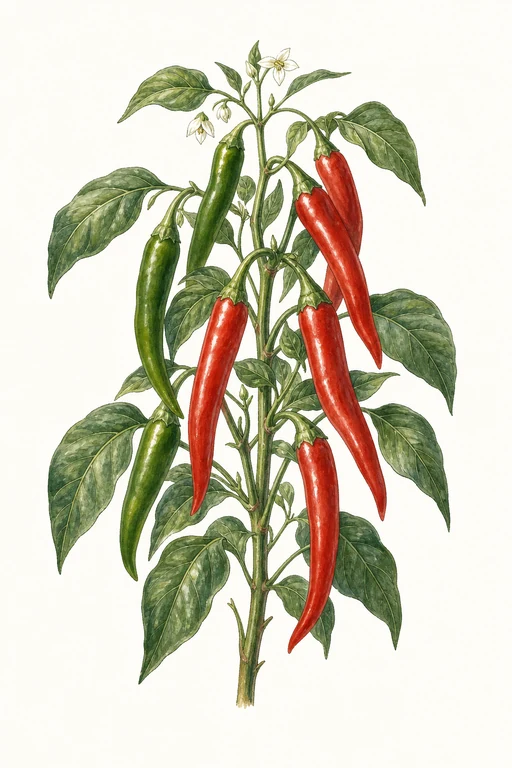
At maturity, the fruits hang in tidy clusters, turning from green to a rich red with a smooth, gently tapered shape that’s made for briny preservation. Grow Sweet Italian for bold, peppery-sweet flavor in pickling jars and for fresh snacking when you want a clean, vibrant bite.
Light: Full SunMaturity: 75 DaysHabit: Bush
Crop Dates : 13a
| Milestone | Date |
|---|---|
| Climate | Frost-Free Climate |
| Growing Approach | Continuous Production |
Crop Details
| Trait | Value |
|---|---|
| Days to Maturity | 75 |
| Sun Requirements | Full Sun |
| Growth Habit | Bush |
| Support Needed | Stake |
| Planting Depth | Normal |
| Germination Temp (°F) | 80 |
| Min Soil Temp (°F) | 60 |
| Min Night Temp (°F) | 50 |
| Harden Off (days) | 10 |
Culinary Notes

Chef's Note
Sweet Italian peppers are built for crunch—thick walls stay snappy in vinegar, so they don’t turn soft or hollow in the jar. Their sweet-leaning pepper flavor plays especially well with brine, garlic, and salty finishes like feta or anchovy.

Best Uses
- quick pickles and brined jarred slices
- fresh snacking with minimal dressing
- roasted sheet-pan strips for caramelized sweetness without collapsing

Flavor Profile

Kitchen Pairings
Frequently Asked Questions
What pest or disease commonly affects Capsicum annuum (Italian pepperoncini), and how do I control it at home?
How often should I water Capsicum annuum during the main growing phase?
How can I tell when my pepperoncini (Capsicum annuum) is ready to harvest?
Sowing Tips

Transplant Conditions
Wait until soil reaches 60°F and nights stay above 50°F before moving outdoors. Harden off for 10 days first.
Expert Note

For pickling-type peppers, harvest when the fruits reach the desired size (often green) and keep soil evenly moist to prevent blossom-end rot.