
Sweet Treats
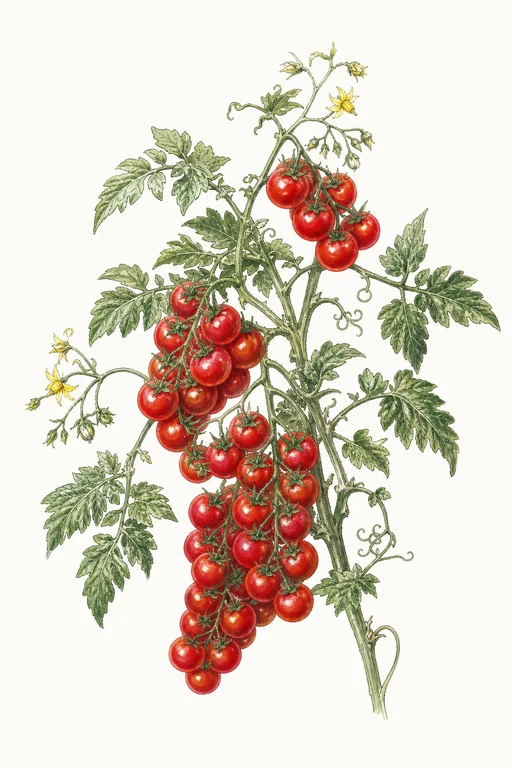
Sweet Treats bursts with a glossy, candy-bright sweetness—small fruits that ripen to a warm, sunset-red sheen and taste like sun-warmed nectar.
The texture is crisp at first bite, then juicy and smooth, with a balanced tang that keeps you reaching for more. Grow Sweet Treats for vibrant fresh snacking, bright salad color, and a lively burst of flavor in sauces and quick pickles.
Light: Full SunMaturity: 60 DaysHabit: Determinate
Crop Dates : 2a
| Milestone | Date |
|---|---|
| Start Indoors | Apr 6th |
| Last Frost | May 25th |
| Transplant / Sow Outdoors | Jul 20th |
| Harvest Begins | Sep 18th |
| Harvest Ends | Aug 29th |
Crop Details
| Trait | Value |
|---|---|
| Days to Maturity | 60 |
| Sun Requirements | Full Sun |
| Growth Habit | Determinate |
| Support Needed | Cage |
| Planting Depth | Deep |
| Germination Temp (°F) | 70 |
| Min Soil Temp (°F) | 60 |
| Min Night Temp (°F) | 50 |
| Harden Off (days) | 10 |
Culinary Notes

Chef's Note
Sweet Treats cherry tomatoes are built for immediate gratification: the sweetness hits first, then the crisp-juicy bite and tang keep the fruit from tasting flat or syrupy. Treat them gently—high heat just long enough to blister and gloss—so they stay springy instead of collapsing.

Best Uses
- eat-and-run fresh snacking—whole or halved so they pop in the mouth
- bright salad color where the juice clings instead of soaking through
- quick pickles (light brine + time) to keep the fruit’s sheen and snap
- fast skillet blistering for a glossy, jammy skin without mush

Flavor Profile

Kitchen Pairings
Frequently Asked Questions
What pest or disease is most likely on Solanum lycopersicum (cherry/tomato type), and how do I manage it?
How often should I water Solanum lycopersicum during peak fruiting to keep fruit from splitting or wilting?
How can I tell when Solanum lycopersicum is ready to harvest (around 60 days)?
Sowing Tips

Transplant Conditions
Wait until soil reaches 60°F and nights stay above 50°F before moving outdoors. Harden off for 10 days first.
Expert Note

For the sweetest flavor, keep soil evenly moist after flowering and avoid letting plants dry out between waterings.