
Swiss Chard Bright Lights
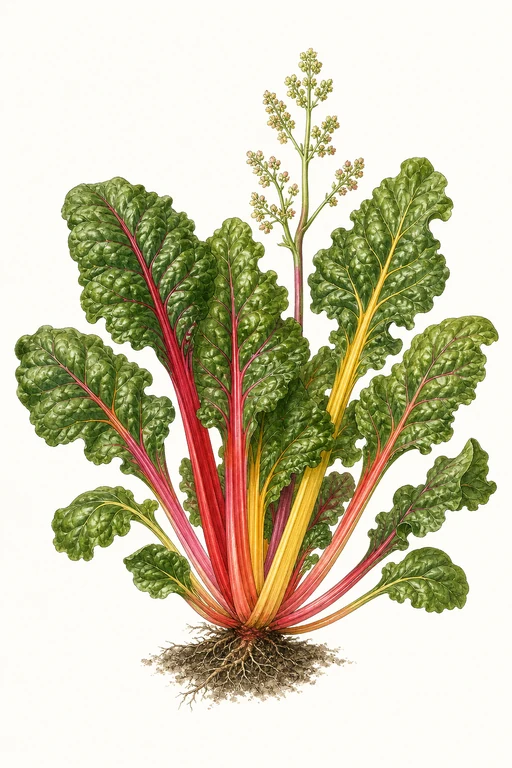
Silky, crisp leaves unfurl over a jewel-toned framework—Bright Lights Swiss Chard brings a luminous mix of stems in radiant gold, candy-red, and electric pink that stands out in the garden at every glance.
The leaves are tender and pleasantly mild, with a smooth, lightly crinkled texture that holds its shape beautifully for bold, colorful meals. Grow it for fresh salads, quick sauté-style skillet favorites, and vibrant sauces where its rainbow color turns every plate into a living bouquet.
Light: Part SunMaturity: 50 DaysHabit: Rosette
Planting schedules and alerts are optimized for Columbus (Zone 6b).
Crop Dates
| Milestone | Date |
|---|---|
| Start Indoors | Apr 4th |
| Last Frost | Apr 25th |
| Transplant / Sow Outdoors | Apr 18th |
| Harvest Begins | Jun 7th |
| Harvest Ends | Oct 16th |
Crop Details
| Trait | Value |
|---|---|
| Days to Maturity | 50 |
| Sun Requirements | Part Sun |
| Growth Habit | Rosette |
| Support Needed | None |
| Planting Depth | Normal |
| Germination Temp (°F) | 70 |
| Min Soil Temp (°F) | 40 |
| Min Night Temp (°F) | 32 |
| Harden Off (days) | 6 |
Culinary Notes

Chef's Note
Bright Lights chard is the kind that stays attractive even after heat—tender leaves, firm juicy stems, and a mild sweetness that doesn’t need heavy seasoning. Use fast, hot cooking with a little lemon and fat (butter or olive oil) so the mineral edge turns glossy instead of sharp.

Best Uses
- quick sauté with a splash of acid to keep leaves supple and stems crisp
- steamed or braised chard that finishes with butter to tame the mineral edge
- hot tosses where the rainbow stems add color—think sheet-pan or skillet meals
- chopped raw or lightly dressed salads where it can hold vinaigrette without going watery

Flavor Profile

Kitchen Pairings
Frequently Asked Questions
What pest or disease most commonly affects Swiss chard (Beta vulgaris var. cicla) and how do I control it?
How often should I water Swiss chard during the main growing phase to keep it productive?
How can I tell when Swiss chard (Beta vulgaris var. cicla) is ready to harvest?
Sowing Tips

Transplant Conditions
Wait until soil reaches 40°F and nights stay above 32°F before moving outdoors. Harden off for 6 days first.
Expert Note

Keep soil consistently moist and thin early so the plants form thick, tender stems without crowding.