
Tadorna
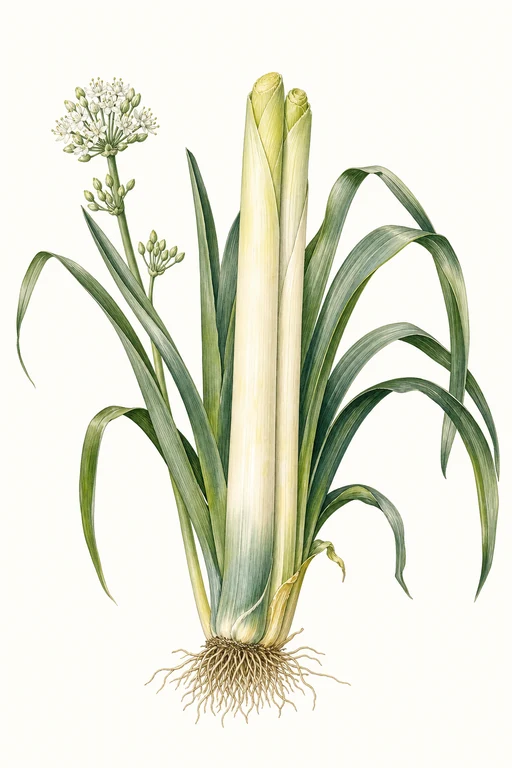
Sweetly mild and richly aromatic, Tadorna leeks develop tender, deeply layered stalks with a clean, buttery bite.
The pale shafts are smooth and firm, building a satisfying crunch that stays graceful through cool-season growth. Ideal for roasting, braising, and silky sauces, Tadorna is a garden favorite for slow, warming flavors and elegant, long-season harvests.
Light: Full SunMaturity: 110 DaysHabit: Upright
Crop Dates : 5a
| Milestone | Date |
|---|---|
| Start Indoors | Apr 10th |
| Last Frost | May 8th |
| Transplant / Sow Outdoors | May 1st |
| Harvest Begins | Aug 19th |
| Harvest Ends | Sep 30th |
Crop Details
| Trait | Value |
|---|---|
| Days to Maturity | 110 |
| Sun Requirements | Full Sun |
| Growth Habit | Upright |
| Support Needed | None |
| Planting Depth | Normal |
| Germination Temp (°F) | 70 |
| Min Soil Temp (°F) | 45 |
| Min Night Temp (°F) | 30 |
| Harden Off (days) | 6 |
Culinary Notes

Chef's Note
Tadorna leeks lean sweet and aromatic with stalks that stay composed—great for cooking methods that demand both silkiness and a clean, buttery bite. Use them to anchor creamy sauces or slow-braised dishes where the layered structure can melt into smooth flavor instead of turning stringy.

Best Uses
- slow braises where the layers turn silky without getting woolly
- roasting—whole or thick-sliced—for caramelized edges and a juicy core
- velvety leek-and-cream style sauces (or blended soups)
- quick sauté to preserve a crisp, pale-stalk bite

Flavor Profile

Frequently Asked Questions
What pest or disease most commonly affects Allium porrum (leek) in home gardens, and how do I control it?
How often should I water Allium porrum during the main growing phase, and what soil moisture level do they need?
How can I tell when Allium porrum (leeks) is ready to harvest?
Sowing Tips

Transplant Conditions
Wait until soil reaches 45°F and nights stay above 30°F before moving outdoors. Harden off for 6 days first.
Expert Note

For late-season shanks, start early enough that transplants establish before cold sets in, then keep soil consistently hilled/firm around the stems as they grow.