
Tall Double Mix
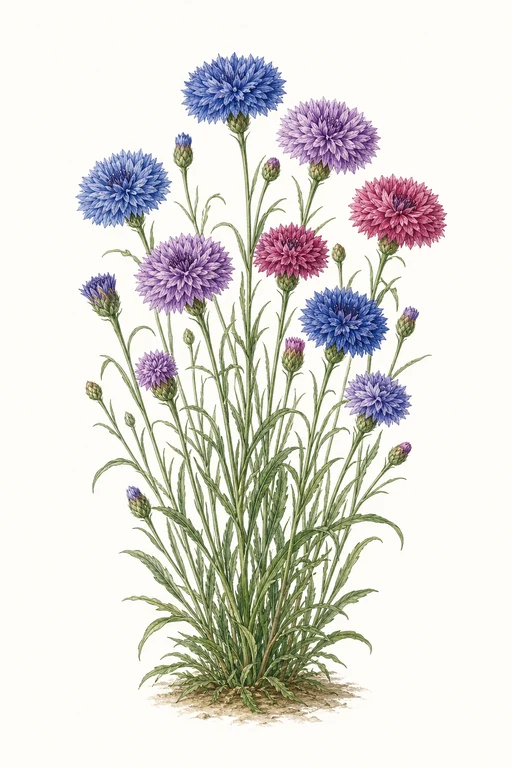
Feathery, cloudlike blooms arrive in a tall, airy show—each head a layered burst of color that feels almost velvet to the eye.
Tall Double Mix carries a rich range of double Bachelor’s Button flowers in shades from cool blues to rosy pinks and warm purples, with a satisfying, long-lasting presence in the garden. Grow it for striking cut-flower impact and for a steady parade of color from early summer into fall—an easy, elegant favorite for borders and sunny beds.
Light: Full SunMaturity: 75 DaysHabit: Upright
Planting schedules and alerts are optimized for Columbus (Zone 6b).
Crop Dates
| Milestone | Date |
|---|---|
| Start Indoors | Direct Sow |
| Last Frost | Apr 25th |
| Transplant / Sow Outdoors | Apr 25th |
| Harvest Begins | Jul 9th |
| Harvest Ends | Oct 16th |
Crop Details
| Trait | Value |
|---|---|
| Days to Maturity | 75 |
| Sun Requirements | Full Sun |
| Growth Habit | Upright |
| Support Needed | None |
| Planting Depth | Normal |
| Germination Temp (°F) | 65 |
| Min Soil Temp (°F) | 50 |
| Min Night Temp (°F) | 35 |
| Harden Off (days) | Not Required |
Culinary Notes

Chef's Note
These double Bachelor’s Button petals bring a noticeable, slightly gentian bitterness that reads crisp rather than soapy, which is exactly what you want on bright, acidic plates. Use them as a finishing garnish or quick-steep so their floral perfume stays forward and their texture doesn’t turn limp.

Best Uses
- as a garnish on citrusy salads where the bitterness brightens the bite
- chopped fine into compound butter for quick-melting bread topping
- steeped briefly for a delicate floral tea or spritz syrup
- folded into chilled grain salads to perfume without wilting fast

Flavor Profile

Kitchen Pairings
Frequently Asked Questions
What pest or disease commonly affects Centaurea cyanus (cornflower), and how can I manage it?
How often should I water Centaurea cyanus during the main growing phase?
How do I know when Centaurea cyanus is ready to harvest?
Sowing Tips

Transplant Conditions
Wait until soil reaches 50°F and nights stay above 35°F before moving outdoors.
Expert Note

Sow outdoors in cool weather because bachelor’s button is happiest without root disturbance, then thin for tall, well-branched plants.