
Tardivo
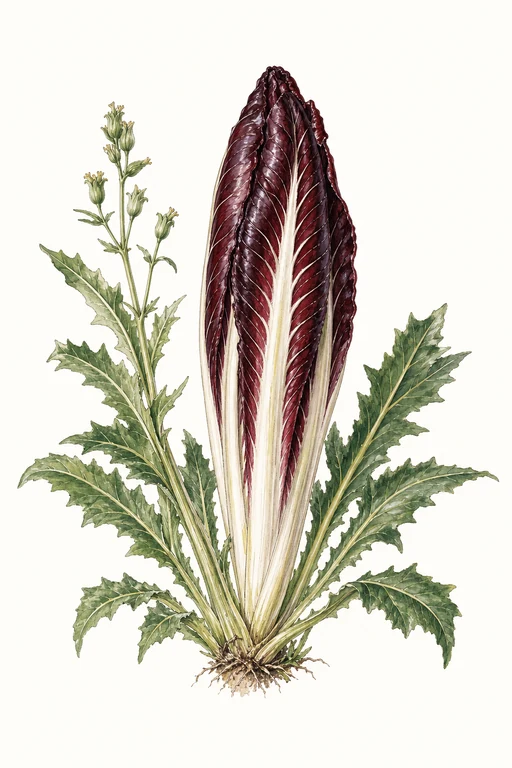
Crisp as morning air, Tardivo radicchio forms tall, elegant heads with a dramatic blush of deep burgundy to near-black at the edges and a pale, creamy core that stays tender.
The leaves are tightly layered and pleasantly snappy, turning especially vivid in cool weather for striking contrast and a clean, bittersweet bite. Grow Tardivo for bold salads and composed platters, or for roasting and braising where its color deepens and its texture holds beautifully in sauces and reductions.
Light: Full SunMaturity: 65 DaysHabit: Rosette
Planting schedules and alerts are optimized for Columbus (Zone 6b).
Crop Dates
| Milestone | Date |
|---|---|
| Start Indoors | Direct Sow |
| Last Frost | Apr 25th |
| Transplant / Sow Outdoors | Apr 25th |
| Harvest Begins | Jun 29th |
| Harvest Ends | Oct 16th |
Crop Details
| Trait | Value |
|---|---|
| Days to Maturity | 65 |
| Sun Requirements | Full Sun |
| Growth Habit | Rosette |
| Support Needed | None |
| Planting Depth | Normal |
| Germination Temp (°F) | 55 |
| Min Soil Temp (°F) | 40 |
| Min Night Temp (°F) | 30 |
| Harden Off (days) | Not Required |
Culinary Notes

Chef's Note
Tardivo’s tightly layered leaves give you a stylish crunch-first bite—bitterness that sharpens as it cools, then softens toward the pale core instead of collapsing. It browns beautifully at the edges and stays structurally sound, so it earns its keep in hot reductions as much as composed, bitter-sweet salads.

Best Uses
- tear-and-dress salads where it holds crunch under vinaigrette
- pan-sautéed or roasted wedges to caramelize edges without turning mushy
- braises and reductions for burgundy depth and sauce-friendly structure

Flavor Profile

Kitchen Pairings
Frequently Asked Questions
What pest or disease is most likely to affect Cichorium intybus (Tardivo), and what should I do?
How often should I water Cichorium intybus during the main growing phase?
How do I tell when Tardivo (Cichorium intybus) is ready to harvest?
Sowing Tips

Transplant Conditions
Wait until soil reaches 40°F and nights stay above 30°F before moving outdoors.
Expert Note

Grow Tardivo radicchio for sturdy roots first, then force in winter under cool, dark, consistently moist conditions to trigger the curled, “octopus-like” leaves.