
Tatsoi
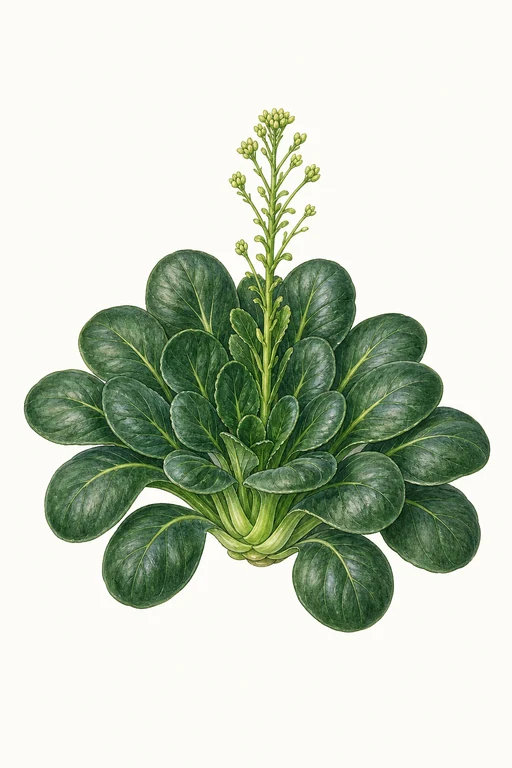
Silky, spoon-shaped leaves unfurl in a tight rosette, offering a gentle, buttery crunch with a mild, savory tang.
‘Tatsoi’ forms dense clusters of deep green foliage that stay tender through the season, making it a standout for quick, vibrant harvests at about 40 days. Grow it for fresh salads and flavorful stir-ins, or for quick sautéing and braising where its delicate texture shines.
Light: Part SunMaturity: 40 DaysHabit: Rosette
Planting schedules and alerts are optimized for Columbus (Zone 6b).
Crop Dates
| Milestone | Date |
|---|---|
| Start Indoors | Mar 28th |
| Last Frost | Apr 25th |
| Transplant / Sow Outdoors | Apr 18th |
| Harvest Begins | May 28th |
| Harvest Ends | Oct 16th |
Crop Details
| Trait | Value |
|---|---|
| Days to Maturity | 40 |
| Sun Requirements | Part Sun |
| Growth Habit | Rosette |
| Support Needed | None |
| Planting Depth | Normal |
| Germination Temp (°F) | 75 |
| Min Soil Temp (°F) | 40 |
| Min Night Temp (°F) | 30 |
| Harden Off (days) | 6 |
Culinary Notes

Chef's Note
Tatsoi’s dense, spoony leaves deliver a creamy crunch and a mild, savory tang—then go silky fast when heat hits, so it never needs long cooking. It’s the kind of green that loves bold umami and a whisper of acid: soy + sesame + a tangy vinegar is where it really sings.

Best Uses
- raw spoon-salads that hold a vinaigrette without turning bitter
- quick stir-fries where it wilts in seconds and stays bright
- sauteed or lightly braised greens for a glossy, velvety side
- topping for grain bowls and noodle dishes that need a fresh, cooling leaf

Flavor Profile

Kitchen Pairings
Frequently Asked Questions
What pest or disease commonly affects tatsoi (Eruca vesicaria subsp. sativa), and how can I manage it?
How often should I water tatsoi during the main growing phase?
How do I know when tatsoi is ready to harvest?
Sowing Tips

Transplant Conditions
Wait until soil reaches 40°F and nights stay above 30°F before moving outdoors. Harden off for 6 days first.
Expert Note

For best flavor, grow tatsoi in cool weather (it tolerates light frost) and avoid heat stress—shade or quick harvesting helps if temperatures spike.