
Tennessee Spinner
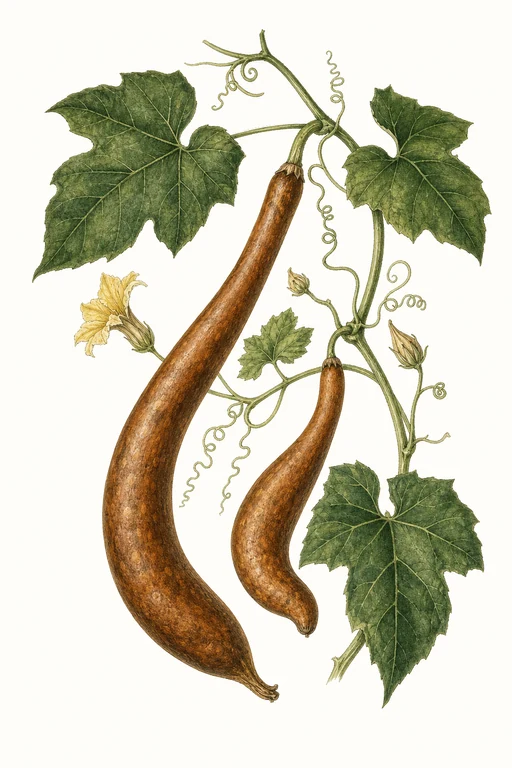
Sink your senses into the Tennessee Spinner’s sculptural beauty: a long, elegant gourd that ripens to a rich, mottled skin and feels satisfyingly firm with a dry, refined interior.
When fully mature, it develops a distinctive “spinner” form—slender and gracefully curved—ideal for drying and display, with a clean, mellow character that holds its shape beautifully. Grow it for the pleasure of watching its vines climb and for the striking, heirloom silhouette it brings to the garden at season’s end.
Light: Full SunMaturity: 100 DaysHabit: Vine
Planting schedules and alerts are optimized for Columbus (Zone 6b).
Crop Dates
| Milestone | Date |
|---|---|
| Start Indoors | May 9th |
| Last Frost | Apr 25th |
| Transplant / Sow Outdoors | May 23rd |
| Harvest Begins | Aug 31st |
| Harvest Ends | Oct 16th |
Crop Details
| Trait | Value |
|---|---|
| Days to Maturity | 100 |
| Sun Requirements | Full Sun |
| Growth Habit | Vine |
| Support Needed | Trellis |
| Planting Depth | Normal |
| Germination Temp (°F) | 70 |
| Min Soil Temp (°F) | 65 |
| Min Night Temp (°F) | 55 |
| Harden Off (days) | 12 |
Culinary Notes

Chef's Note
Tennessee Spinner is a gourd that earns its keep through structure: even when seasoned hard, it keeps a firm, tidy bite instead of turning watery. If you let it mature, it becomes a rehydration dream—soak first, then simmer until tender, without losing that “dry interior to supple body” transformation.

Best Uses
- cube it young for quick sautéing, where it holds shape
- use fully mature gourds for drying and later rehydration in stews
- roast wedges young for caramelized edges and a clean, nutty finish
- season and simmer in brothy dishes where it won’t collapse

Flavor Profile

Kitchen Pairings
Frequently Asked Questions
What pest or disease commonly affects Lagenaria siceraria (Lagenaria) and what should I do?
How often should I water Lagenaria siceraria during its main growing phase?
How can I tell when Tennessee Spinner (Lagenaria siceraria) is ready to harvest?
Sowing Tips

Transplant Conditions
Wait until soil reaches 65°F and nights stay above 55°F before moving outdoors. Harden off for 12 days first.

Direct Sow Preferred
Sensitive roots — does not transplant well. If starting indoors, use biodegradable pots and disturb roots as little as possible when moving outdoors.
Expert Note

For ornamental/utility gourds like these, grow on vines with lots of sun and let shells fully cure on the plant for a hard, durable shell.