
Thai Purple
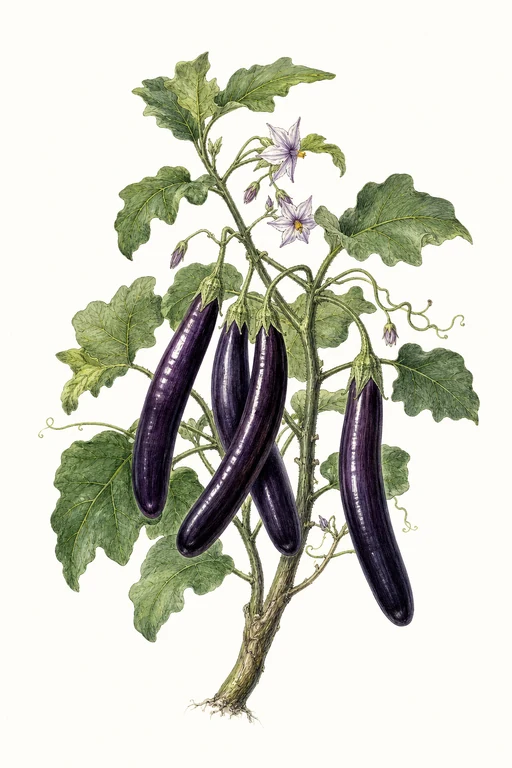
Sink your spoon into the inky elegance of Thai Purple eggplant—its glossy, deep violet skin catches the light like lacquer, while the flesh stays tender and subtly sweet.
Long and slender with a refined, silky bite, these fruits shine when roasted until meltingly soft, grilled for smoky depth, or sliced into vibrant stir-fries and curry-ready sauces. A steady performer for home gardens, Thai Purple rewards attention with a continuous harvest from midsummer into fall.
Light: Full SunMaturity: 75 DaysHabit: Upright
Planting schedules and alerts are optimized for Columbus (Zone 6b).
Crop Dates
| Milestone | Date |
|---|---|
| Start Indoors | Mar 7th |
| Last Frost | Apr 25th |
| Transplant / Sow Outdoors | Jun 20th |
| Harvest Begins | Sep 3rd |
| Harvest Ends | Oct 16th |
Crop Details
| Trait | Value |
|---|---|
| Days to Maturity | 75 |
| Sun Requirements | Full Sun |
| Growth Habit | Upright |
| Support Needed | Cage |
| Planting Depth | Normal |
| Germination Temp (°F) | 80 |
| Min Soil Temp (°F) | 60 |
| Min Night Temp (°F) | 50 |
| Harden Off (days) | 10 |
Culinary Notes

Chef's Note
Thai Purple’s slender fruits cook up silky rather than spongy, so they hold their shape through stir-fries and braises. Roast or grill until the flesh collapses, then season hard with chile, lime, and aromatics—this variety takes on smoke and heat without tasting hollow.

Best Uses
- char-grilled slices for smoky-sweet edges
- roasted halves until spoon-tender for mash/smear
- stir-fry planks that stay glossy and not watery
- curry and braise thickened by the eggplant’s creamy reduction

Flavor Profile

Frequently Asked Questions
What pest or disease commonly affects Solanum melongena (eggplant) like Thai Purple, and how can I control it at home?
How often should I water Thai Purple eggplant during its main growing phase?
How do I tell when Thai Purple eggplant is ready to harvest?
Sowing Tips

Transplant Conditions
Wait until soil reaches 60°F and nights stay above 50°F before moving outdoors. Harden off for 10 days first.
Expert Note

Warm up both soil and seedlings before transplanting, and keep soil evenly moist to prevent blossom drop common in eggplant.