
Thomson
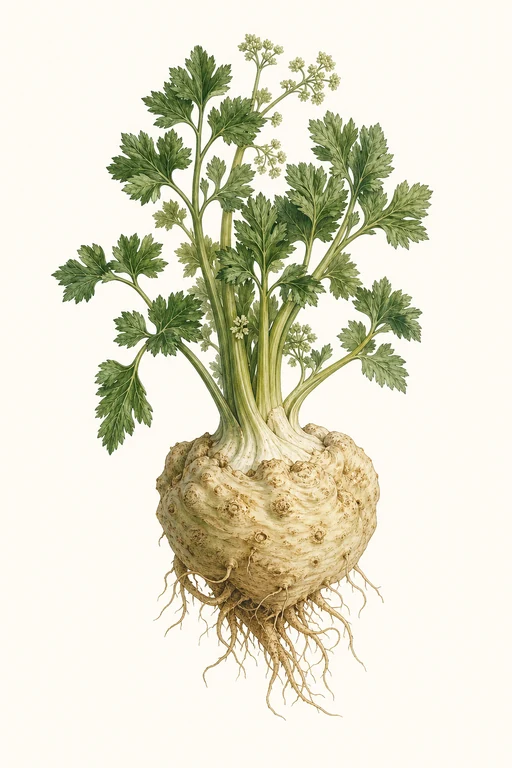
Aromatically bold from the first peel, Thomson celeriac offers a deeply celery-scented, nutty-sweet flavor with a firm, creamy interior that stays pleasantly dense.
Its knobby, turnip-like form develops into a smooth, pale flesh with a clean bite and a refined, savory character—ideal for roasting, braising, and velvety purées, as well as pickling for a tangy crunch. For gardeners who love roots with personality, Thomson delivers dependable harvests around 100 days with a striking, harvest-ready silhouette.
Light: Part SunMaturity: 100 DaysHabit: Upright
Planting schedules and alerts are optimized for Columbus (Zone 6b).
Crop Dates
| Milestone | Date |
|---|---|
| Start Indoors | Feb 14th |
| Last Frost | Apr 25th |
| Transplant / Sow Outdoors | Apr 18th |
| Harvest Begins | Jul 27th |
| Harvest Ends | Oct 16th |
Crop Details
| Trait | Value |
|---|---|
| Days to Maturity | 100 |
| Sun Requirements | Part Sun |
| Growth Habit | Upright |
| Support Needed | None |
| Planting Depth | Normal |
| Germination Temp (°F) | 70 |
| Min Soil Temp (°F) | 45 |
| Min Night Temp (°F) | 28 |
| Harden Off (days) | 6 |
Culinary Notes

Chef's Note
Thomson celeriac is a root with actual presence—its celery-strong perfume comes through even after heat, and the interior stays dense rather than collapsing into mush. It purées like cashmere but still slices clean for roasting or pickling, making it a go-to for dishes that need a fragrant, savory backbone.

Best Uses
- roasted wedges with browned edges for a nutty, concentrated bite
- braised or stewed into silky chunks that don’t turn watery
- velvety purée with butter/cream for a refined spoonable texture
- quick pickling for a tangy, snappy crunch

Flavor Profile

Kitchen Pairings
Frequently Asked Questions
What pest or disease most commonly affects celeriac (Apium graveolens var. rapaceum), and how can I treat it?
How often should I water celeriac during the main growing phase, and what soil moisture level should I maintain?
How do I tell when celeriac is ready to harvest?
Sowing Tips

Transplant Conditions
Wait until soil reaches 45°F and nights stay above 28°F before moving outdoors. Harden off for 6 days first.
Expert Note

Start celeriac early indoors, keep seedlings evenly moist, and avoid hilling/overhandling the stem base so the swollen root forms cleanly.