
Tigger Melon
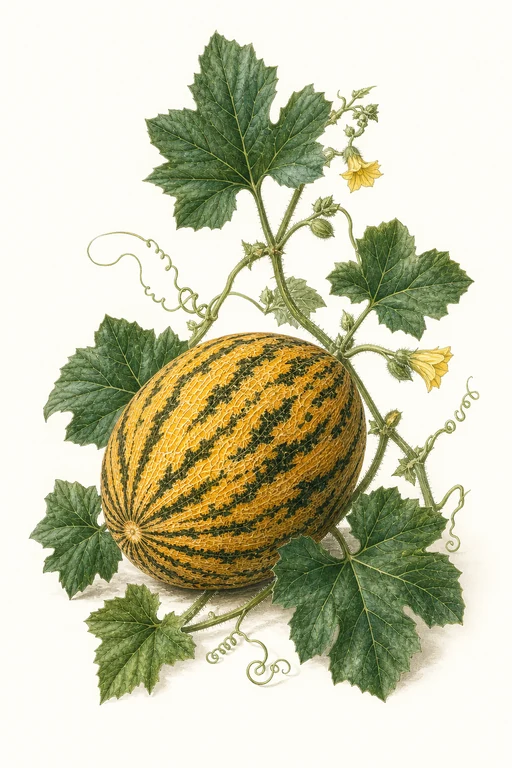
Sun-warmed sweetness pours from Tigger Melon’s boldly patterned flesh—vividly fragrant, honeyed, and richly aromatic with a crisp, juicy bite.
The fruit develops a distinctive striped look and a tender, succulent texture that shines whether you enjoy it straight from the garden or use it to brighten fresh salsas and vibrant fruit salads. A specialty melon for gardeners who love showstopping color and a memorable, fragrant payoff at harvest.
Light: Full SunMaturity: 80 DaysHabit: Vine
Planting schedules and alerts are optimized for Columbus (Zone 6b).
Crop Dates
| Milestone | Date |
|---|---|
| Start Indoors | Jun 6th |
| Last Frost | Apr 25th |
| Transplant / Sow Outdoors | Jun 20th |
| Harvest Begins | Sep 8th |
| Harvest Ends | Oct 16th |
Crop Details
| Trait | Value |
|---|---|
| Days to Maturity | 80 |
| Sun Requirements | Full Sun |
| Growth Habit | Vine |
| Support Needed | Trellis |
| Planting Depth | Normal |
| Germination Temp (°F) | 70 |
| Min Soil Temp (°F) | 70 |
| Min Night Temp (°F) | 55 |
| Harden Off (days) | 12 |
Culinary Notes

Chef's Note
Tigger Melon tastes like sunshine—high-aroma, honeyed sweetness with enough snap that it doesn’t collapse the minute it hits acid. Serve it cold and briefly dressed: quick lime, a little heat, and salty fat (feta or prosciutto) make the perfume pop without turning the fruit watery.

Best Uses
- chilled fork-slicing as a standalone dessert with a pinch of salt and lime
- fresh salsa that stays juicy (dice-size for grip) with quick acid to wake it up
- fruit salad with citrus and herbs where it can hold its crispness under dressing

Flavor Profile

Frequently Asked Questions
What pest or disease commonly affects Cucumis melo (Tigger Melon), and how can I manage it at home?
How often should I water Tigger Melon during the main growing phase?
How do I tell when Tigger Melon is ready to harvest (Cucumis melo, ~80 days)?
Sowing Tips

Transplant Conditions
Wait until soil reaches 70°F and nights stay above 55°F before moving outdoors. Harden off for 12 days first.

Direct Sow Preferred
Sensitive roots — does not transplant well. If starting indoors, use biodegradable pots and disturb roots as little as possible when moving outdoors.
Expert Note

For the most fragrance, grow with full sun and let vines run, then harvest when the rind color deepens and the blossom end gives slightly.