
Tobacco Box
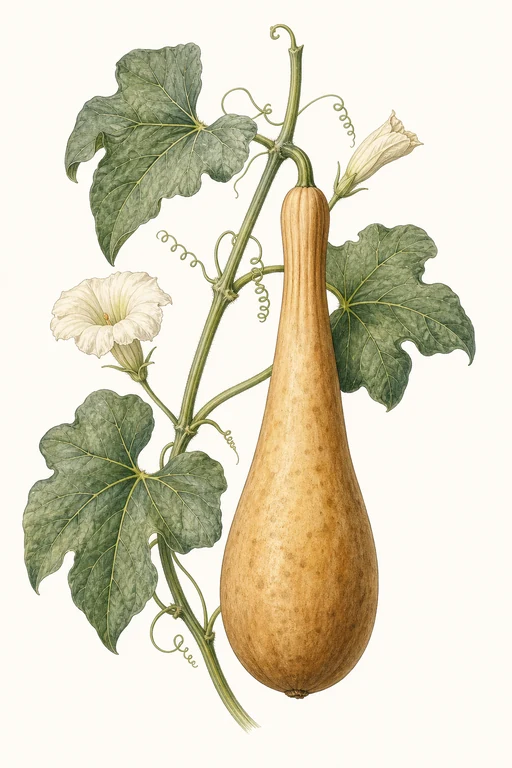
Fragrant, pale blossoms open to reveal the Tobacco Box gourd’s signature—an elongated, bottle-like fruit with a softly fluted neck and a warm, sun-kissed rind that matures to a deep, dry tan.
The flesh is fine-grained and tender when young, with a mild, clean flavor that welcomes fresh use and also shines when dried for later crafting and storage. Grow it for its striking form and dependable, long-season performance—100 days to maturity—so your garden yields both beauty and utility in one remarkable gourd.
Light: Full SunMaturity: 100 DaysHabit: Vine
Planting schedules and alerts are optimized for Columbus (Zone 6b).
Crop Dates
| Milestone | Date |
|---|---|
| Start Indoors | May 9th |
| Last Frost | Apr 25th |
| Transplant / Sow Outdoors | May 23rd |
| Harvest Begins | Aug 31st |
| Harvest Ends | Oct 16th |
Crop Details
| Trait | Value |
|---|---|
| Days to Maturity | 100 |
| Sun Requirements | Full Sun |
| Growth Habit | Vine |
| Support Needed | Trellis |
| Planting Depth | Normal |
| Germination Temp (°F) | 75 |
| Min Soil Temp (°F) | 70 |
| Min Night Temp (°F) | 55 |
| Harden Off (days) | 10 |
Culinary Notes

Chef's Note
Tobacco Box gourd doesn’t bully your palate—when young, it’s fine-grained and tender with a clean, mildly sweet profile that takes on whatever aromatics you throw at it. Treat it like a delicate squash: fast sauté or bright, acidic dressing keeps it snappy, while roasting or rehydration turns it into an absorbent, comfort-soup body.

Best Uses
- young-fruit sauté (quick heat to preserve tenderness)
- thin-ribbon fresh slices in salads with bright vinaigrettes
- braise or stew for a mild, absorbent base
- cube and roast for caramel-edged, lightly sweet bites
- dry it for long storage and later rehydration in soups

Flavor Profile

Frequently Asked Questions
What pest or disease most often affects Lagenaria siceraria (tobacco box), and how can I control it?
How often should I water Lagenaria siceraria during its main growing phase?
How do I tell when Lagenaria siceraria (tobacco box) is ready to harvest?
Sowing Tips

Transplant Conditions
Wait until soil reaches 70°F and nights stay above 55°F before moving outdoors. Harden off for 10 days first.

Direct Sow Preferred
Sensitive roots — does not transplant well. If starting indoors, use biodegradable pots and disturb roots as little as possible when moving outdoors.
Expert Note

For Tobacco Box gourds, warm the soil well (and use black plastic mulch if needed) to avoid slow growth, then water consistently after vines establish while keeping the fruits dry for curing.