
Tomatoberry Garden
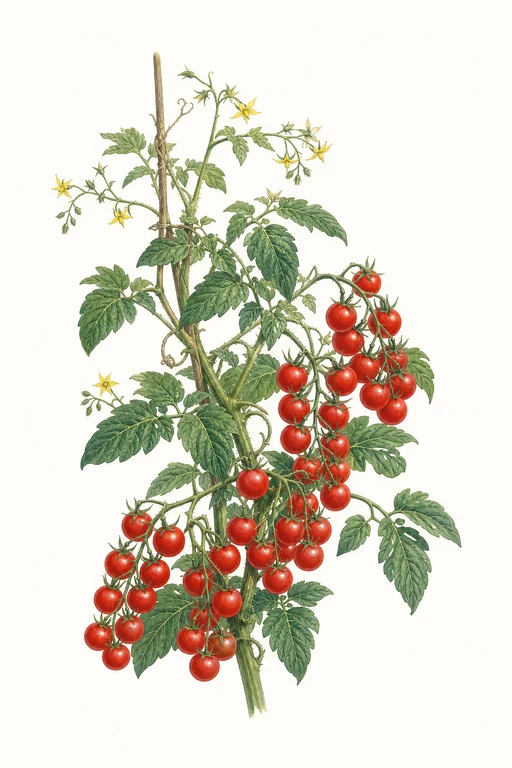
Sun-warmed and jewel-bright, Tomatoberry Garden produces a steady parade of cherry tomatoes with a vivid, classic tomato-red glow and a lively, tangy-sweet flavor.
The skins are taut yet tender, with a juicy bite and a pleasantly aromatic snap that makes them irresistible straight from the vine. Ideal for fresh salads, bright salsas, and quick roasting on the tray, these compact fruits also shine in vibrant sauces and preserves for gardeners who love bold, bite-sized color.
Light: Full SunMaturity: 60 DaysHabit: Determinate
Crop Dates : 3a
| Milestone | Date |
|---|---|
| Start Indoors | Mar 27th |
| Last Frost | May 15th |
| Transplant / Sow Outdoors | Jul 10th |
| Harvest Begins | Sep 8th |
| Harvest Ends | Sep 1st |
Crop Details
| Trait | Value |
|---|---|
| Days to Maturity | 60 |
| Sun Requirements | Full Sun |
| Growth Habit | Determinate |
| Support Needed | Cage |
| Planting Depth | Deep |
| Germination Temp (°F) | 75 |
| Min Soil Temp (°F) | 60 |
| Min Night Temp (°F) | 50 |
| Harden Off (days) | 8 |
Culinary Notes

Chef's Note
These cherry tomatoes are built for impact: taut-tender skins and juicy bite mean they don’t turn to mush in a bowl, even when dressed or tossed warm. Roast them hot to bring up caramel sweetness while keeping that tangy snap that makes salsas and quick sauces feel electric.

Best Uses
- straight-from-the-vine snacking and wedge-style salads where they hold their shape under dressing
- tray roasting (hot and fast) to concentrate sweetness without collapsing
- punchy salsa and quick chopped salads with sharp, fresh acid
- rapid simmer sauces and quick preserves that stay bright thanks to the berry-sized fruit

Flavor Profile

Kitchen Pairings
Frequently Asked Questions
What pest or disease most commonly affects Solanum lycopersicum (tomatoberry), and what should I do?
How often should I water Solanum lycopersicum during the main growing phase?
How can I tell when Solanum lycopersicum is ready to harvest (about 60 days)?
Sowing Tips

Transplant Conditions
Wait until soil reaches 60°F and nights stay above 50°F before moving outdoors. Harden off for 8 days first.
Expert Note

For best sweet flavor, transplant only when soil is consistently ~60°F+ and keep uneven moisture from forming by mulching and watering steadily.