
Tomatoberry
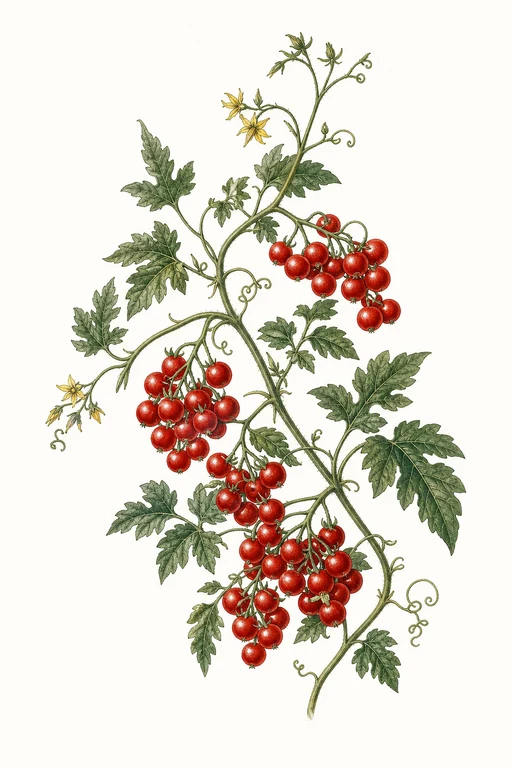
Bursting with a sweet-tomato perfume and a bright, juicy snap, Tomatoberry cherry tomatoes ripen in about 60 days to a glossy, true-red bead that feels cool and firm in the palm.
Their flavor is lively and fruit-forward, with a balanced tang that shines in fresh salads and as a vibrant burst of color in sauces, roasting trays, and quick pickles. Grow Tomatoberry for a long harvest of tidy clusters—each berry a little jewel ready to brighten every plate.
Light: Full SunMaturity: 60 DaysHabit: Indeterminate
Crop Dates : 6a
| Milestone | Date |
|---|---|
| Start Indoors | Mar 13th |
| Last Frost | May 1st |
| Transplant / Sow Outdoors | Jun 26th |
| Harvest Begins | Aug 25th |
| Harvest Ends | Oct 10th |
Crop Details
| Trait | Value |
|---|---|
| Days to Maturity | 60 |
| Sun Requirements | Full Sun |
| Growth Habit | Indeterminate |
| Support Needed | Cage |
| Planting Depth | Deep |
| Germination Temp (°F) | 75 |
| Min Soil Temp (°F) | 60 |
| Min Night Temp (°F) | 50 |
| Harden Off (days) | 8 |
Culinary Notes

Chef's Note
Tomatoberry’s small berries give you a bright, fruit-leaning tomato flavor with a clean juicy snap—so they don’t collapse into mush in quick heat. Use them where you want the “pop” (roasts, fast sauces, quick pickles) and let them balance richness with their lively tang.

Best Uses
- cut-it-open fresh eating on salads where the juice stays crisp
- roast on a hot tray until skins blister for candy-like bursts
- quick pickles for a sharp-sweet bite that cuts through fat
- stir into warm pan sauces where they burst without turning starchy

Flavor Profile

Kitchen Pairings
Frequently Asked Questions
What pest or disease is most likely on Solanum lycopersicum (tomatoberry), and how can I control it?
How often should I water tomatoberry during its main growing phase, and what soil moisture level should I aim for?
How do I tell when Solanum lycopersicum (tomatoberry) is ready to harvest?
Sowing Tips

Transplant Conditions
Wait until soil reaches 60°F and nights stay above 50°F before moving outdoors. Harden off for 8 days first.
Expert Note

Transplant only when nighttime temps are reliably warm (about 50°F+) and the soil is near 60°F to prevent chilling shock, then provide consistent moisture for best sweet flavor.