
Treviso Rosso
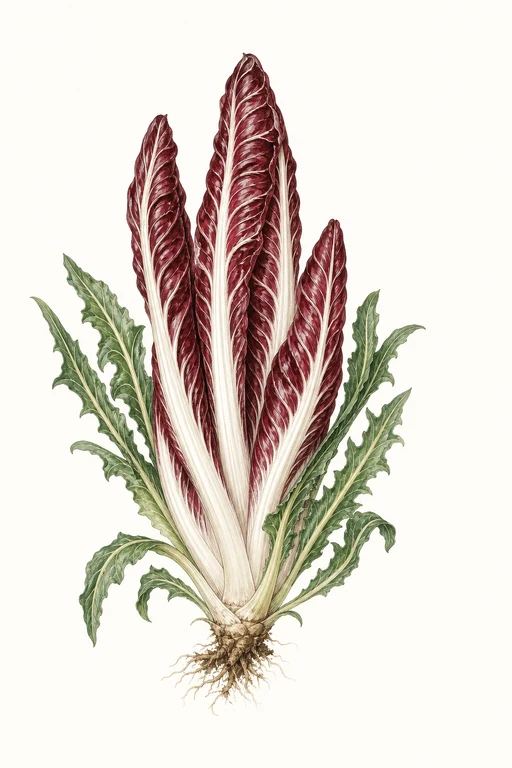
Aromatic and bold, Treviso Rosso unfurls into dramatic, tapered rosettes with a deep burgundy-red heart and crisp, pale ribs that catch the light like fine lace.
The leaves are satisfyingly crunchy and gently bitter, with a sweet, earthy edge that shines in fresh salads and becomes especially mellow when warmed. Grow Treviso Rosso for striking winter color and a showpiece harvest that turns every plate into a garden portrait.
Light: Full SunMaturity: 70 DaysHabit: Rosette
Planting schedules and alerts are optimized for Columbus (Zone 6b).
Crop Dates
| Milestone | Date |
|---|---|
| Start Indoors | Mar 28th |
| Last Frost | Apr 25th |
| Transplant / Sow Outdoors | Apr 25th |
| Harvest Begins | Jul 4th |
| Harvest Ends | Oct 16th |
Crop Details
| Trait | Value |
|---|---|
| Days to Maturity | 70 |
| Sun Requirements | Full Sun |
| Growth Habit | Rosette |
| Support Needed | None |
| Planting Depth | Normal |
| Germination Temp (°F) | 45 |
| Min Soil Temp (°F) | 40 |
| Min Night Temp (°F) | 35 |
| Harden Off (days) | 6 |
Culinary Notes

Chef's Note
Treviso Rosso’s tapered, lacy structure keeps a clean crunch even when dressed, and its bitterness softens beautifully with heat—so it plays both sides of the fork. Choose it when you want that unmistakable bitter edge to cut through fatty proteins or get rounded by sweet-sour balsamics.

Best Uses
- shaved raw salad where the leaves stay icy-crisp under light dressing
- quick sauté or pan-warm until bitterness rounds off and ribs soften without collapsing
- grilled/charred wedges dressed with bright fat to counter the bitterness
- slow-roasted or braised leaves to turn sharp notes mellow and syrupy

Flavor Profile

Kitchen Pairings
Frequently Asked Questions
How do I prevent and treat downy mildew or leaf spotting on Treviso Rosso (Cichorium intybus)?
How often should I water Treviso Rosso while it’s forming its heads in the main growing phase?
What are the best signs that Treviso Rosso (Cichorium intybus) is ready to harvest after ~70 days?
Sowing Tips

Transplant Conditions
Wait until soil reaches 40°F and nights stay above 35°F before moving outdoors. Harden off for 6 days first.
Expert Note

Grow radicchio through cool weather and aim for consistent moisture; if summer heat moves in early, bitter flavors increase and heads may fail to develop.