
Triton
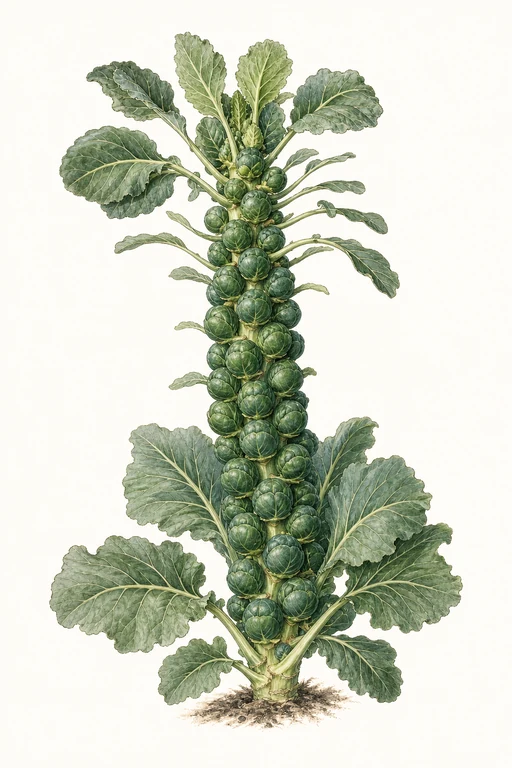
Sweetly nutty and delicately tender, Triton Brussels sprouts develop a dense, velvety texture with a balanced, mild bite that shines after cool weather.
Each compact head forms along the sturdy stalk in tight, uniform clusters—so you’ll harvest a pleasing rhythm of crisp greens for steaming, roasting, and savory skillet sautés, as well as hearty braises and gratins. A dependable 85-day performer, Triton is made for home gardeners who love reliable flavor from the first frost onward.
Light: Full SunMaturity: 85 DaysHabit: Rosette
Planting schedules and alerts are optimized for Columbus (Zone 6b).
Crop Dates
| Milestone | Date |
|---|---|
| Start Indoors | Mar 28th |
| Last Frost | Apr 25th |
| Transplant / Sow Outdoors | Apr 25th |
| Harvest Begins | Jul 19th |
| Harvest Ends | Oct 16th |
Crop Details
| Trait | Value |
|---|---|
| Days to Maturity | 85 |
| Sun Requirements | Full Sun |
| Growth Habit | Rosette |
| Support Needed | None |
| Planting Depth | Normal |
| Germination Temp (°F) | 45 |
| Min Soil Temp (°F) | 45 |
| Min Night Temp (°F) | 35 |
| Harden Off (days) | 6 |
Culinary Notes

Chef's Note
Triton heads hit that rare sweet spot where the flavor reads nutty but never feral, and the texture stays dense and velvety instead of hollow. It roasts beautifully—get some blister on the outer leaves, then finish with something fatty and salty like browned butter and Parmesan to round the mild bite.

Best Uses
- roast until the outer leaves blister and go chestnut-sweet
- steam then toss with browned butter for a silky, even coat
- pan-sear cut-sides to build caramelized edges for weeknight bowls
- braise or gratin with cream to tame the bite and make a plush texture

Flavor Profile

Kitchen Pairings
Frequently Asked Questions
What pest or disease most commonly affects Brassica oleracea var. gemmifera (Brussels sprouts), and how can I manage it at home?
During the main growing phase, how often should I water Brussels sprouts to get steady growth?
How do I know Brassica oleracea var. gemmifera is ready to harvest (and which sprouts to pick first)?
Sowing Tips

Transplant Conditions
Wait until soil reaches 45°F and nights stay above 35°F before moving outdoors. Harden off for 6 days first.
Expert Note

Start indoors for uniformity, then transplant only after nights are consistently above ~35°F and keep plants well-watered to prevent loose, small sprouts.