
Tulsi (Holy Basil)
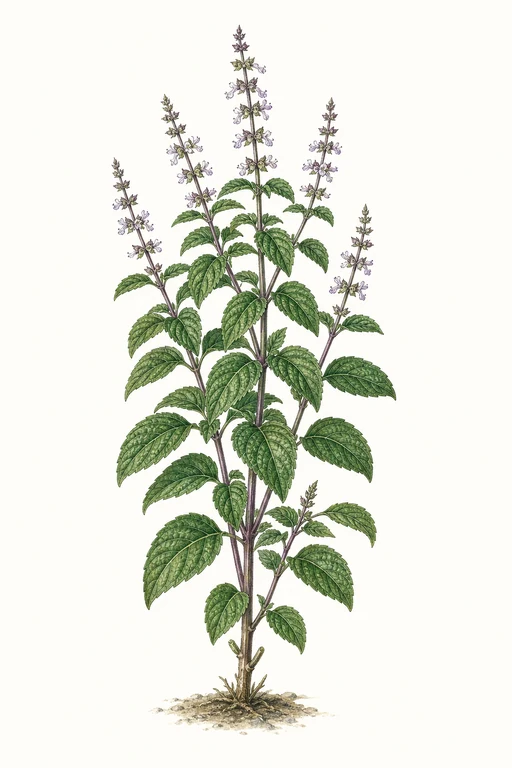
Aromatic as a warm breeze—Tulsi Holy Basil fills the garden with a vivid, clove-tinged fragrance and a cool, minty lift that lingers on the fingertips.
Its leaves are softly textured and richly veined, forming an upright, branching plant that’s as beautiful as it is fragrant. Grow Tulsi for fresh leaf use and fragrant infusions, and for finishing sauces and pickling blends with its unmistakable, spiritual basil character.
Light: Full SunMaturity: 70 DaysHabit: Upright
Crop Dates : 8a
| Milestone | Date |
|---|---|
| Start Indoors | Feb 18th |
| Last Frost | Apr 1st |
| Transplant / Sow Outdoors | May 13th |
| Harvest Begins | Jul 22nd |
| Harvest Ends | Nov 5th |
Crop Details
| Trait | Value |
|---|---|
| Days to Maturity | 70 |
| Sun Requirements | Full Sun |
| Growth Habit | Upright |
| Support Needed | None |
| Planting Depth | Normal |
| Germination Temp (°F) | 70 |
| Min Soil Temp (°F) | 60 |
| Min Night Temp (°F) | 50 |
| Harden Off (days) | 10 |
Culinary Notes

Chef's Note
Tulsi’s hallmark is that clove-basil perfume with a refreshing minty snap that doesn’t just “taste herby”—it perfumes the whole dish. Use it near the end (or in quick steeps) so the leaves keep their cool lift instead of turning flat under long heat.

Best Uses
- tear-and-mix finishing for hot rice or noodles at the last second
- steep for fragrant tea and warm infusions
- pulse into a quick pesto with nuts and bitter greens kept in check
- fold into pickling brine or vinegar sauces for a cooling-herbal top note

Flavor Profile

Kitchen Pairings
Frequently Asked Questions
What’s a common disease or pest problem for Ocimum tenuiflorum (Holy Basil/Tulsi), and how do I fix it?
How often should I water Holy Basil during its main growing phase?
How can I tell when Ocimum tenuiflorum is ready to harvest?
Sowing Tips

Transplant Conditions
Wait until soil reaches 60°F and nights stay above 50°F before moving outdoors. Harden off for 10 days first.
Expert Note

Pinch the tips after transplanting (and again once more) to force a bushier Tulsi plant and improve leaf yield.