
Turk's Turban
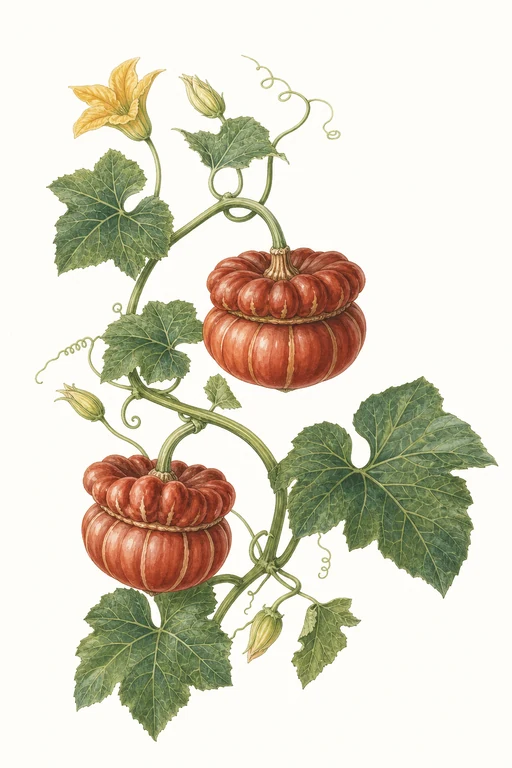
A dramatic, turbaned silhouette rises on vigorous vines—each gourd cloaked in a velvety, rose-to-rosewood blush that deepens as it ripens.
Turk’s Turban brings a satin-smooth skin with subtle ribbing and a sculptural, fluted crown that catches the light beautifully. Grow for show-stopping dried displays, wreaths, and autumn arrangements—its bold form and rich color mature reliably around 90 days.
Light: Full SunMaturity: 90 DaysHabit: Vine
Planting schedules and alerts are optimized for Columbus (Zone 6b).
Crop Dates
| Milestone | Date |
|---|---|
| Start Indoors | Apr 25th |
| Last Frost | Apr 25th |
| Transplant / Sow Outdoors | May 9th |
| Harvest Begins | Aug 7th |
| Harvest Ends | Oct 16th |
Crop Details
| Trait | Value |
|---|---|
| Days to Maturity | 90 |
| Sun Requirements | Full Sun |
| Growth Habit | Vine |
| Support Needed | Trellis |
| Planting Depth | Normal |
| Germination Temp (°F) | 70 |
| Min Soil Temp (°F) | 65 |
| Min Night Temp (°F) | 55 |
| Harden Off (days) | 10 |
Culinary Notes

Chef's Note
Even if it’s grown for its sculptural dried look, the eating version behaves like a dependable winter/cooking squash—firm-fleshed and willing to drink up butter, garlic, and warm spices. Treat it like a roast-and-puree gourd: you’ll get clean, thick texture rather than bright, salad-level flavor.

Best Uses
- Not the showpiece—use it as you would a cooking pumpkin/summer squash: roast chunks until caramel at the edges
- Puree for silky soup or thick, spoonable mash with butter and stock
- Cut into manageable pieces for braises where it can soak up aromatics

Flavor Profile

Frequently Asked Questions
What pest or disease most often affects Cucurbita maxima (Turk’s Turban), and how can I control it?
How often should I water Turk’s Turban during the main growing phase?
How do I know when Turk’s Turban is ready to harvest?
Sowing Tips

Transplant Conditions
Wait until soil reaches 65°F and nights stay above 55°F before moving outdoors. Harden off for 10 days first.

Direct Sow Preferred
Sensitive roots — does not transplant well. If starting indoors, use biodegradable pots and disturb roots as little as possible when moving outdoors.
Expert Note

Direct-sow or, if you must start early, transplant only once soil is warm and keep root disturbance to a minimum (use a biodegradable pot).