
Variegated Pink Eureka
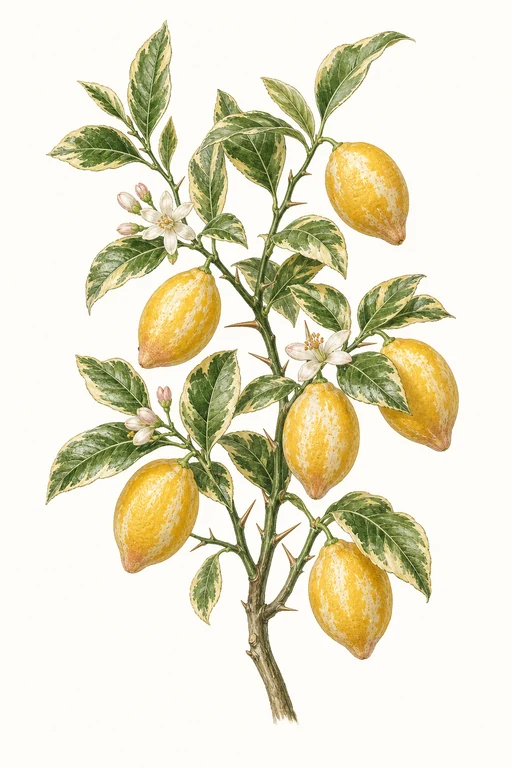
Sunlit and singular, Variegated Pink Eureka wears its lemon brightness with a blush—striped, creamy-gold fruit that ripens to a rosy, candy-pink interior glow.
The flesh is juicy and fragrant, with a lively balance of tang and sweetness, and a tender, softly segmented texture that shines in bright applications. Grow this ornamental-meets-market lemon for long-season harvests and a showpiece tree that perfumes the garden with every warm breeze.
Light: Full SunMaturity: 180 DaysHabit: Shrub
Planting schedules and alerts are optimized for Columbus (Zone 6b).
Crop Dates
| Milestone | Date |
|---|---|
| Last Frost | Apr 25th |
| Growing Approach | Protected Environment Only |
Crop Details
| Trait | Value |
|---|---|
| Days to Maturity | 180 |
| Sun Requirements | Full Sun |
| Growth Habit | Shrub |
| Support Needed | None |
| Planting Depth | Normal |
| Germination Temp (°F) | 70 |
| Min Soil Temp (°F) | 60 |
| Min Night Temp (°F) | 50 |
| Harden Off (days) | 10 |
Culinary Notes

Chef's Note
This pink-Eureka carries classic lemon tang but with a sweeter, more perfumed finish—great when you want the juice to feel bright without tasting sharp. Use both zest and segments: the flesh stays tender and juicy while the oils give everything from fish to syrups that unmistakable citrus snap.

Best Uses
- juice for high-impact vinaigrettes and quick ceviche-style marinades
- zest-forward glazes for fish and roast chicken
- candy-rind style candied lemon or aromatic syrups
- segmented-eating fruit over yogurt or olive-oil gelato-style desserts

Flavor Profile

Kitchen Pairings
Frequently Asked Questions
What pest or disease is most common on Citrus limon (lemon) and how do I treat it?
How often should I water Citrus limon during the main growing season?
How can I tell when my Citrus limon is ready to harvest?
Sowing Tips

Transplant Conditions
Wait until soil reaches 60°F and nights stay above 50°F before moving outdoors. Harden off for 10 days first.
Expert Note

In continental US climates, start citrus in a container and keep it outdoors only when nights stay warm, then bring it in before temperatures drop.